
Last updated September 10, 2026
Level 1 sweep and inspection to the NFPA 211 annual standard - flue, crown, cap, and flashing checked and photographed
Chimney sweep logs do not sweep chimneys. They loosen some creosote - which then falls where a brush and vacuum still have to collect it.
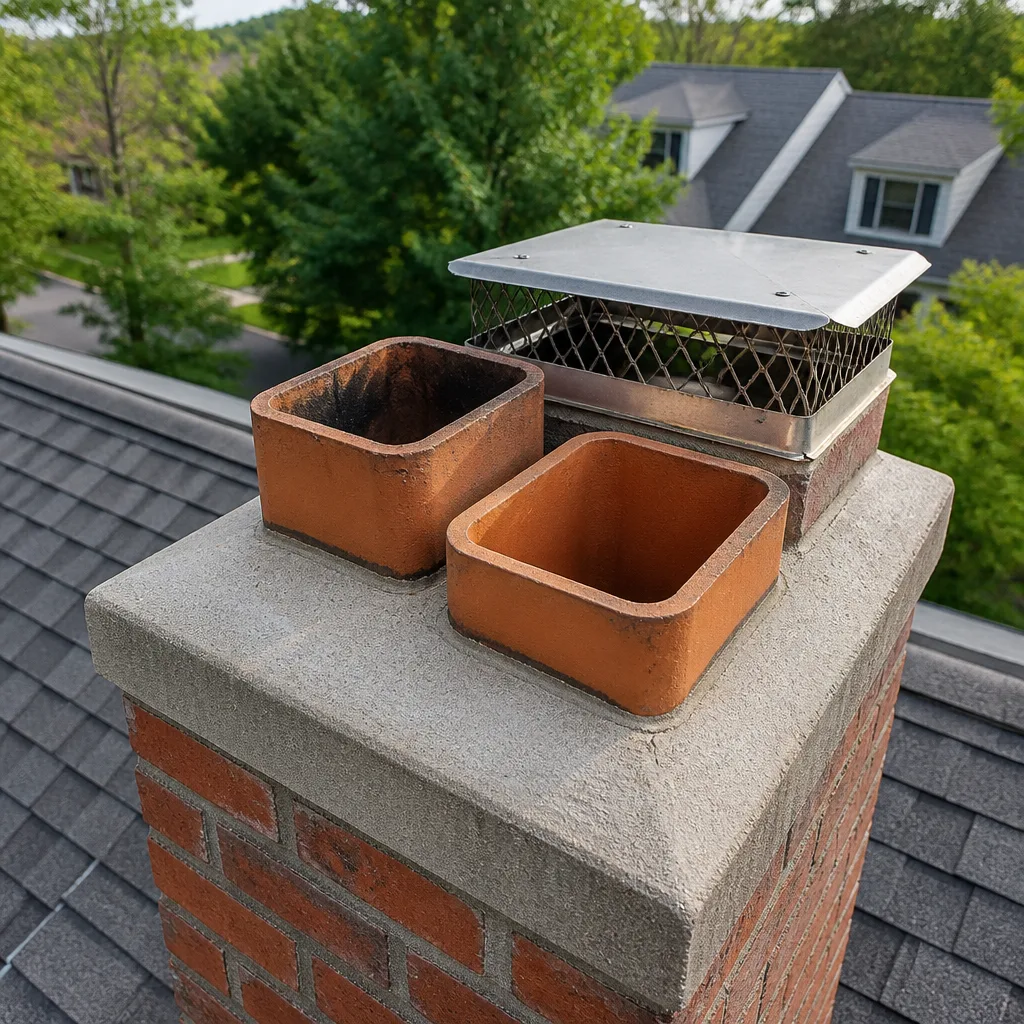
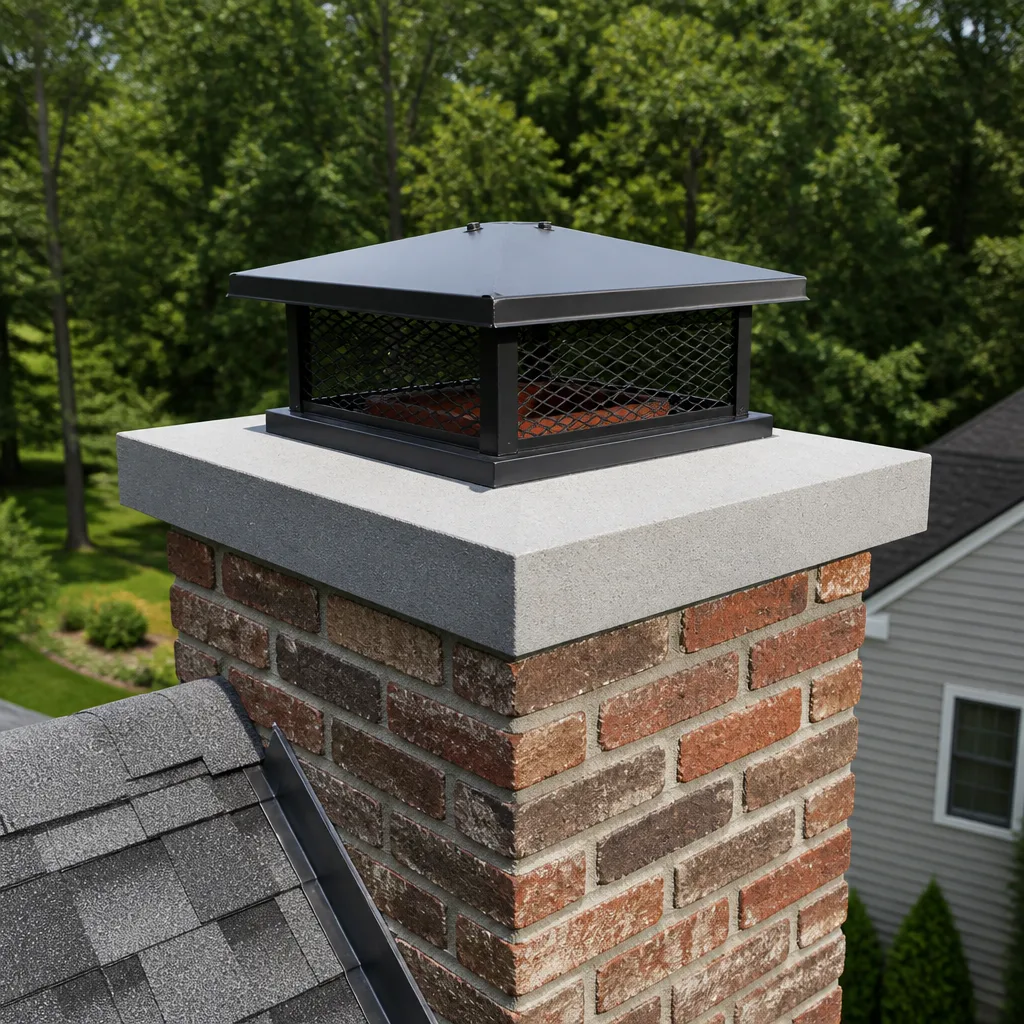
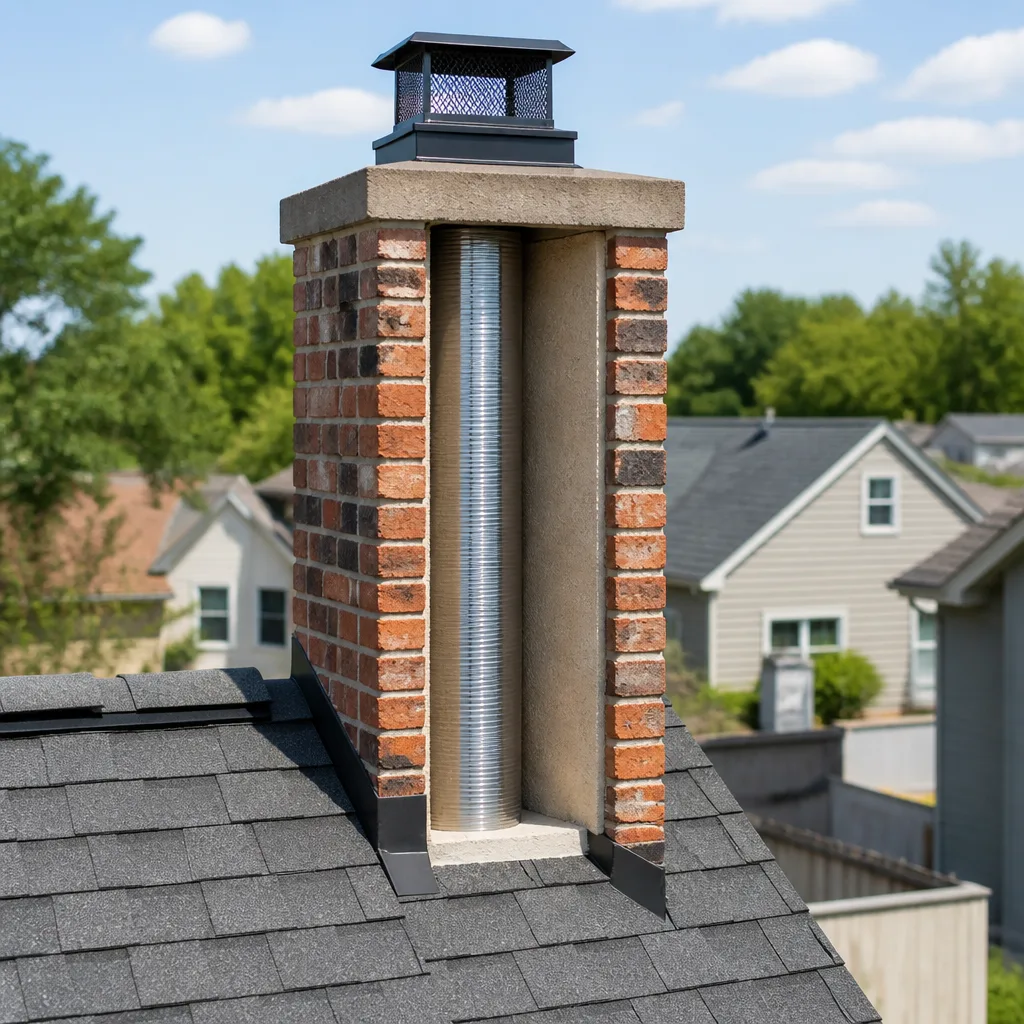
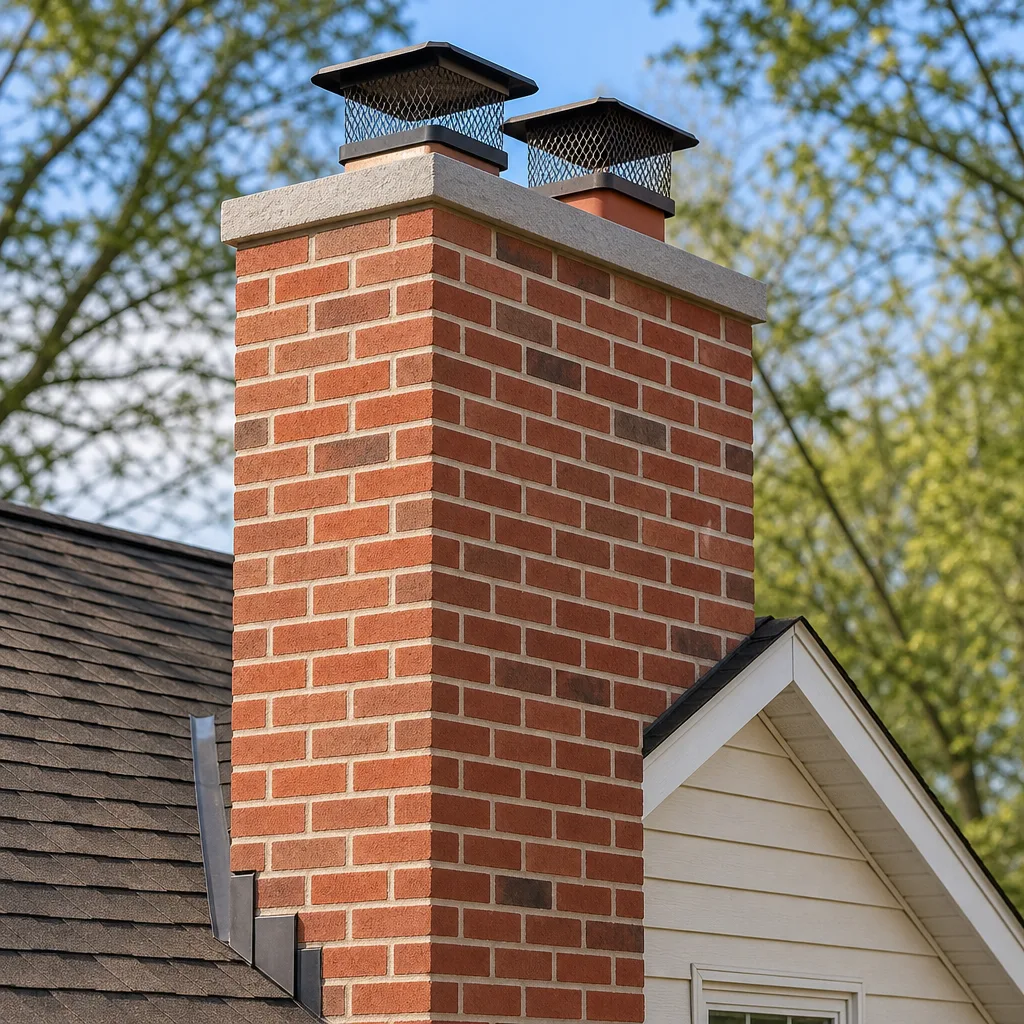
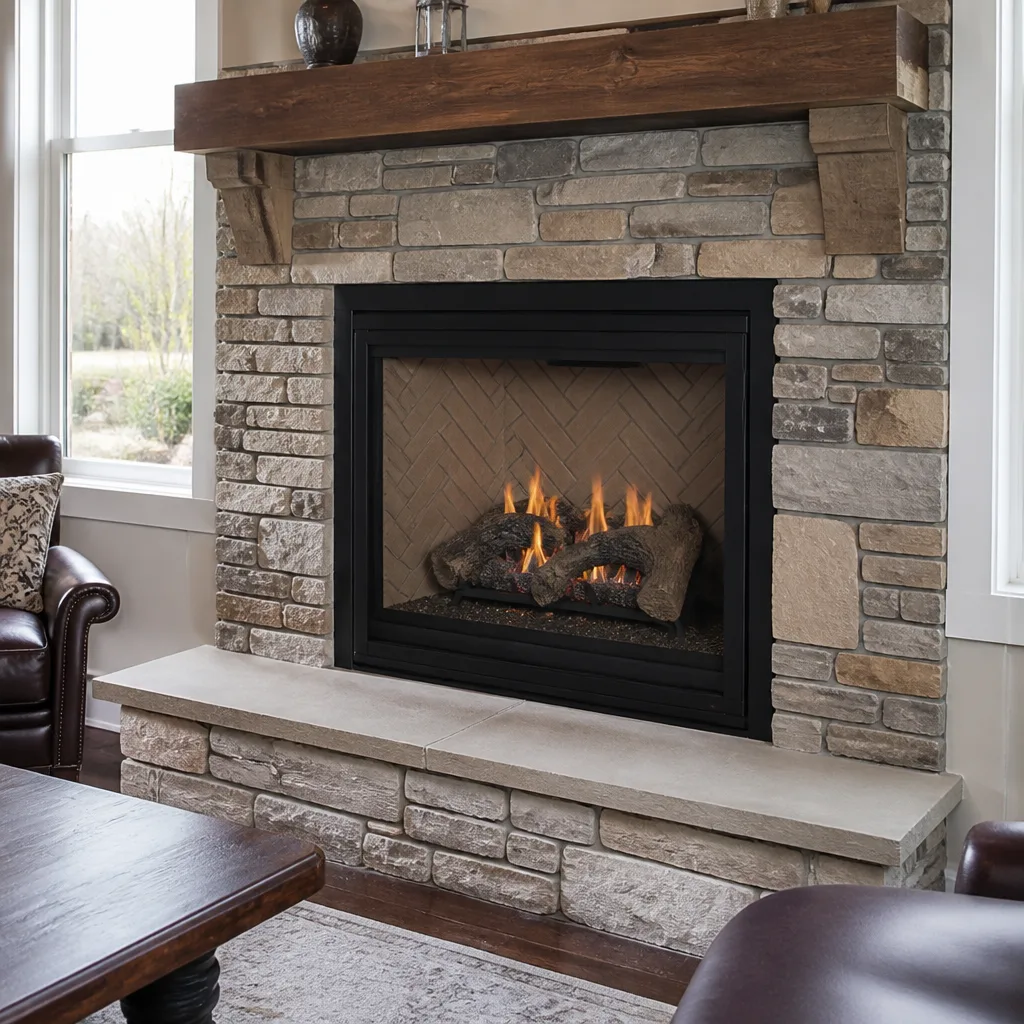
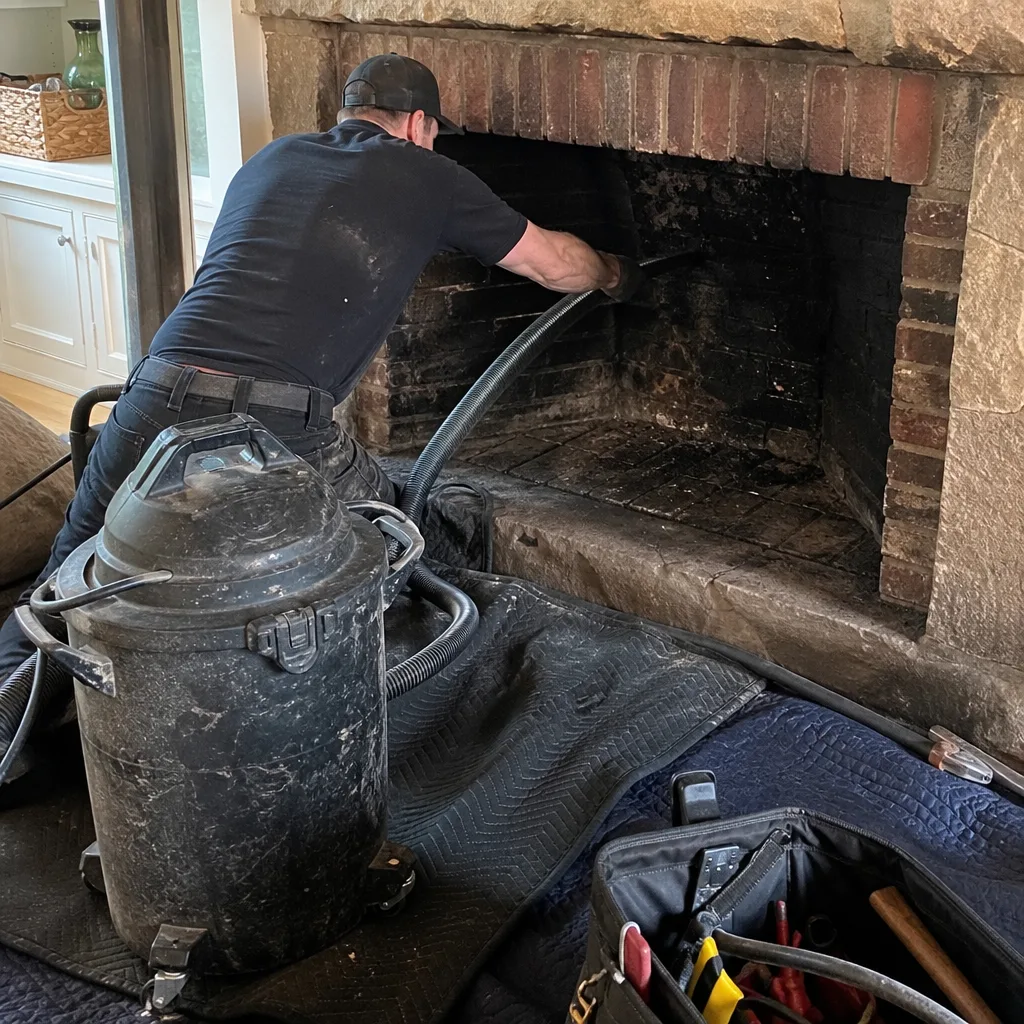 Before
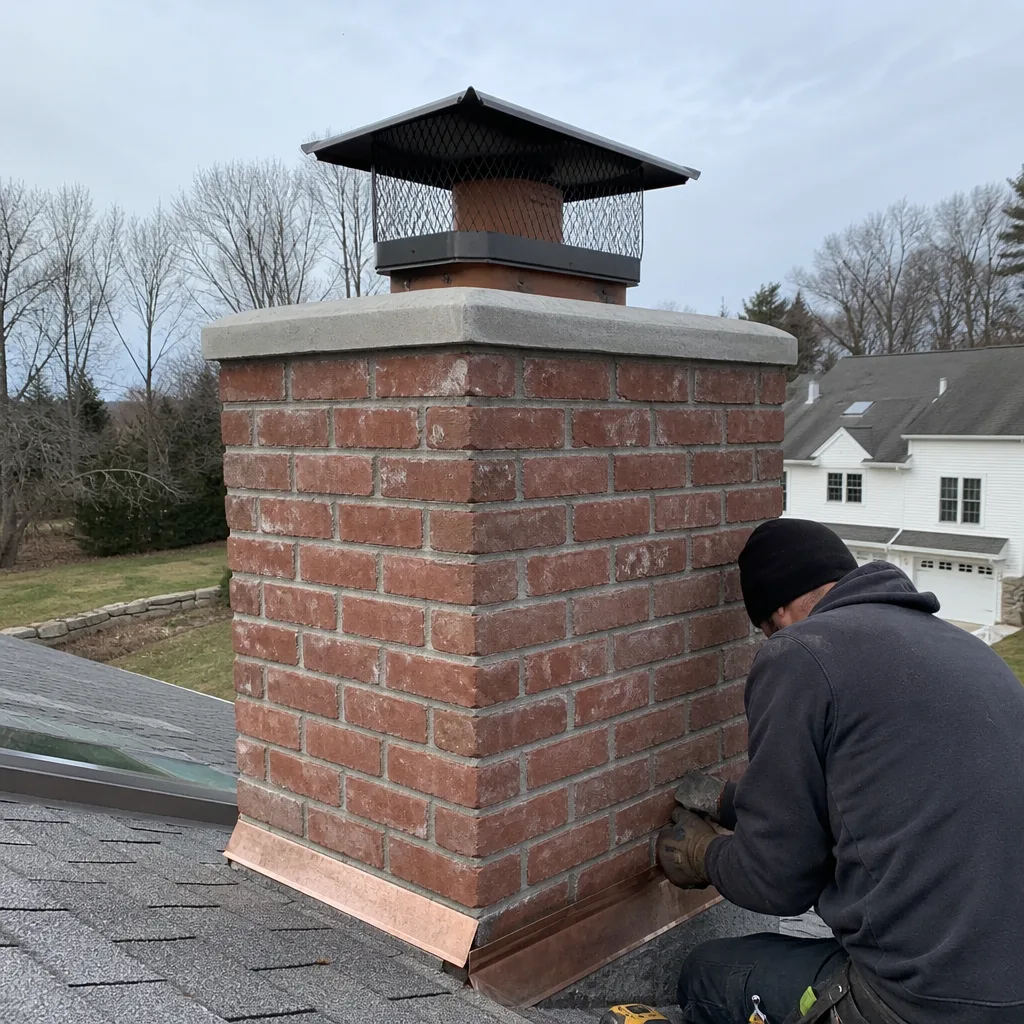 After
After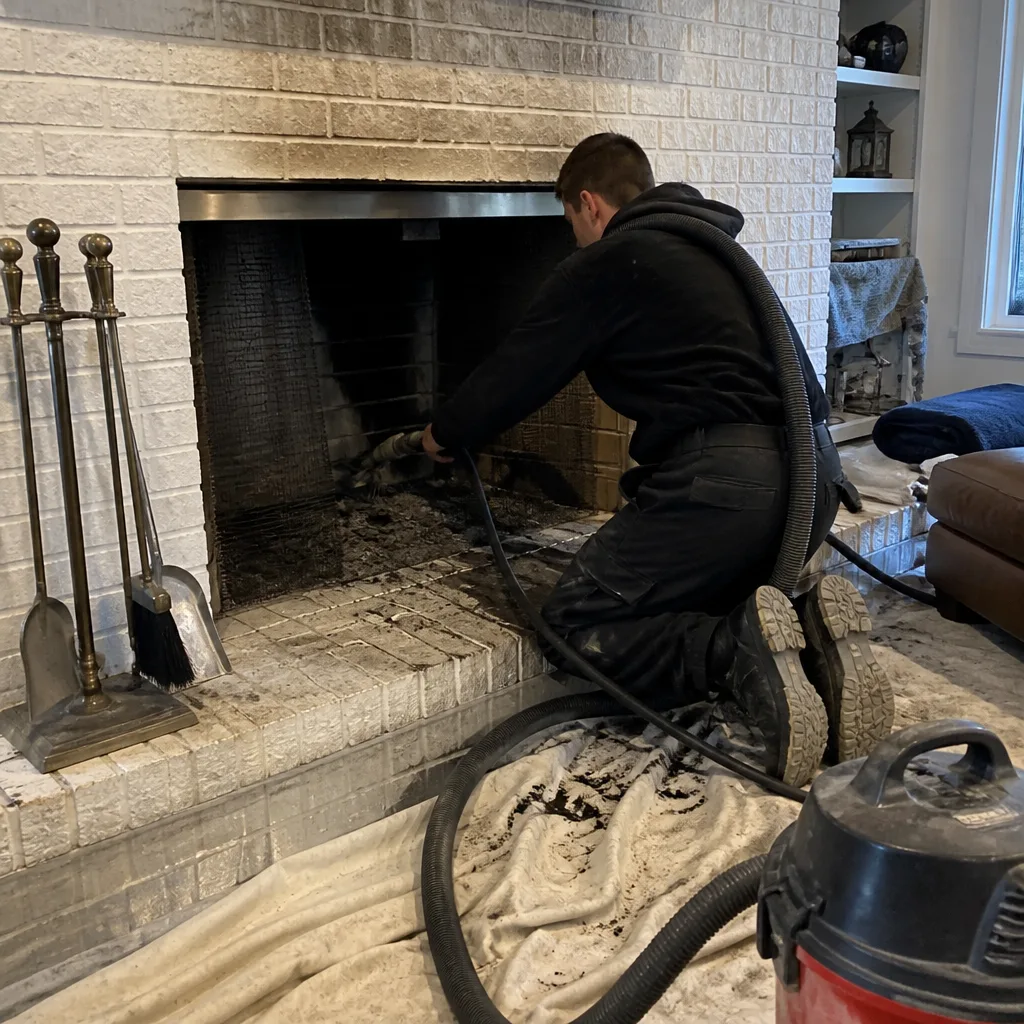 Before
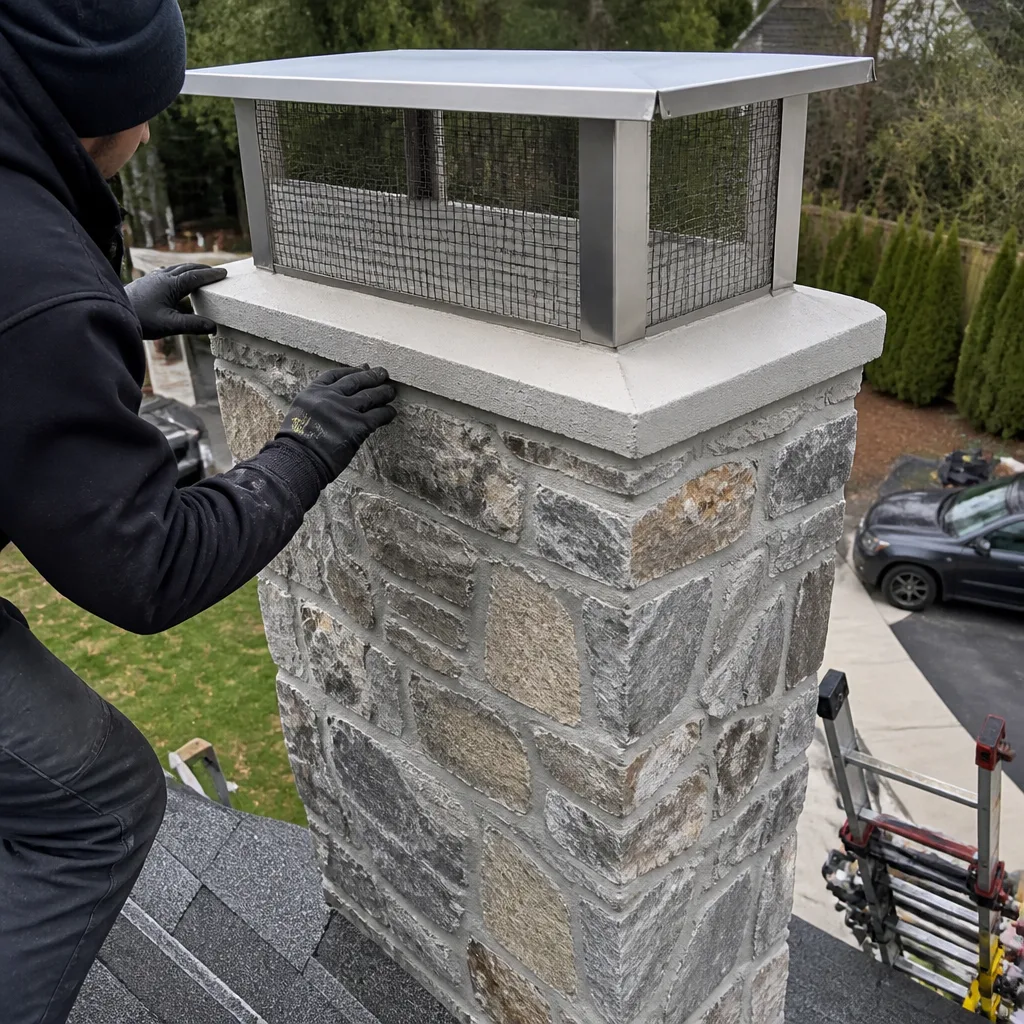 After
After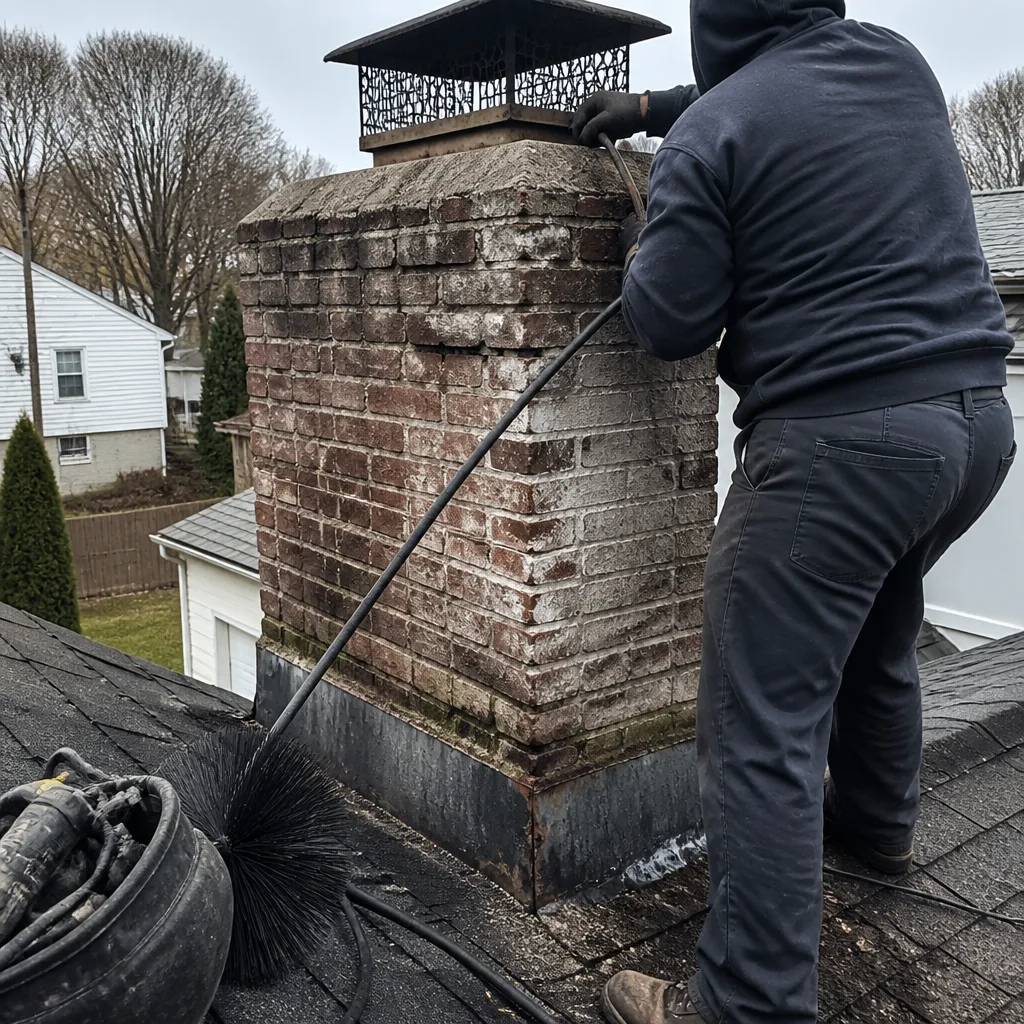 Before
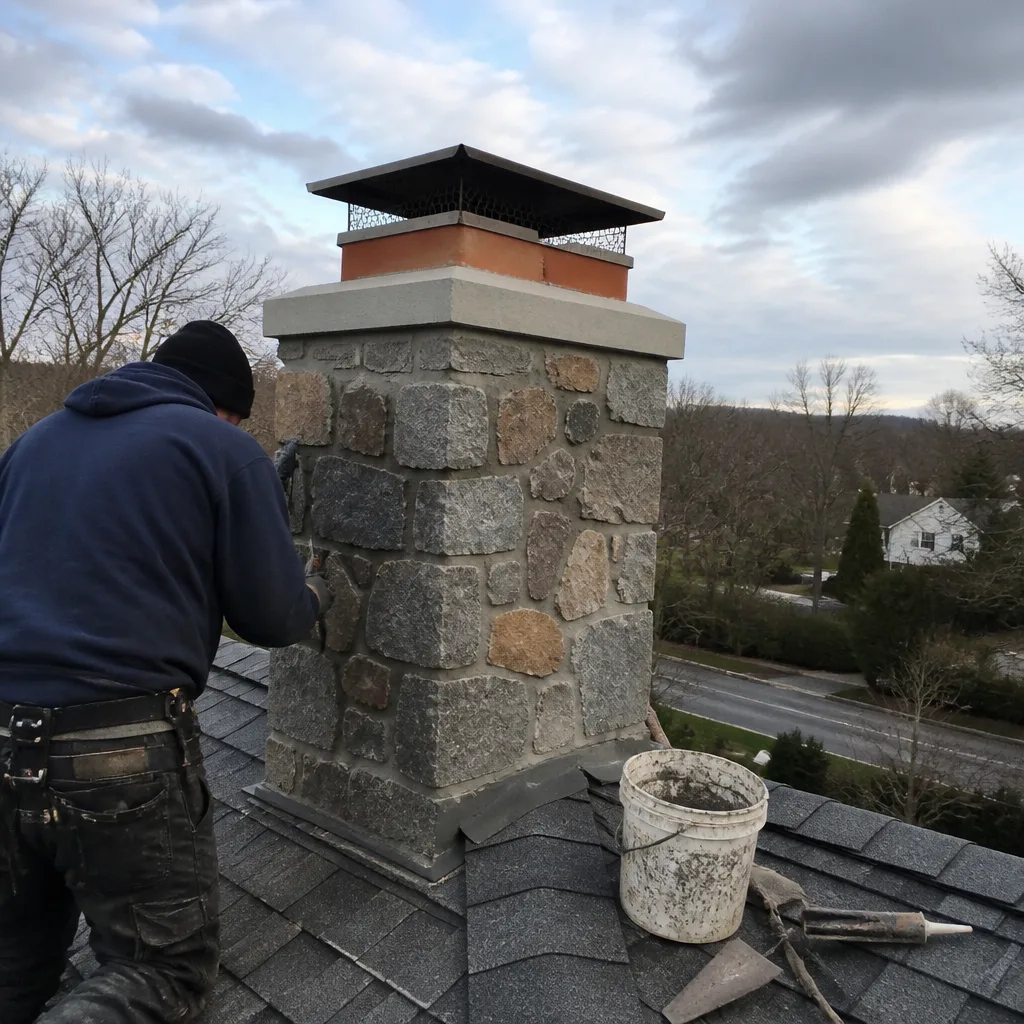 After
AfterHow to Hire a Chimney Cleaning Contractor in Stamford: A Step-by-Step Guide
Connecticut does not license chimney sweeps the way it licenses electricians or plumbers. There is no state board test, no required apprenticeship, no mandatory certification for the person who scrapes creosote out of your flue. That means the barrier to putting the words “chimney professional” on the side of a van is essentially zero. Which is how a homeowner in Stamford ends up with a guy on the roof who bought a brush kit three weeks ago and prints invoices from his phone at the door. This guide gives you the exact questions to ask, the documents to demand, and the one moment in the phone call when you can tell whether you are dealing with a real sweep or a call-center operation that will sell the job to the lowest-bidding subcontractor. We have worked chimneys in Stamford since 1999, and we will tell you exactly how to avoid the horror stories.
Quick Answer
To hire a competent chimney cleaning contractor in Stamford, ask for the sweep’s CSIA certification number and verify it at csia.org, request a copy of the insurance certificate with completed operations coverage for at least $1 million, get a written scope of work with fixed pricing before anyone sets foot on your roof, and run from any company that quotes a suspiciously low flat rate over the phone. Then confirm the person who shows up is the person you talked to. In Stamford’s older housing stock, where flues have been in service since the 1950s and 60s, that verification is the difference between a $199 cleaning and a $3,800 “emergency liner” scare that never needed to happen.
Table of Contents
- The One Moment That Tells You Everything
- Why Connecticut’s Lack of Sweep Licensing Means You Have to Do the Checking
- The Three Questions to Ask on the Phone
- How to Read an Insurance Certificate Yourself
- Why the Lowest Quote in Stamford Is Almost Always a Setup
- What a Written Scope of Work Must Include
- How to Verify CSIA Certification the Right Way
- Common Mistakes to Avoid
- When to Call a Professional
- Frequently Asked Questions
- The Bottom Line
The One Moment That Tells You Everything
There is a specific point in every call with a chimney company where the nature of the operation reveals itself. It is not when they quote you a price. It is not when they tell you how long they have been in business. It is this: you say the words “Stamford” or “Glenbrook” or “Shippan Point” and ask about a specific house, and you either hear the person on the other end know the neighborhood, or you hear them looking it up.
A real Stamford chimney sweep knows that houses near Cove Island are exposed to salt air and rusted caps are a routine call. He knows that the older colonials up toward North Stamford tend to have unlined masonry flues built in the 50s and 60s. He knows that homes in Waterside have a different venting configuration than the raised ranches in Springdale. When you name your street, a real sweep can often tell you before he arrives whether you likely have a clay tile liner or a stainless one, and what condition the crown is probably in given the age of the home. None of that information comes from a database. It comes from having actually been on roofs in those neighborhoods, repeatedly, for years.
A call center operator cannot do that. They are in a room in another state reading a script. When you say “Stamford,” they hear a zip code. The moment they pause to type your address into a routing program, you know you are not hiring a sweep. You are hiring a dispatcher who will sell your job to whichever subcontractor bids lowest for it that week. The specific question to ask is not “Do you work in Stamford?” It is “Tell me something you regularly see in houses in this part of Stamford.” A real sweep answers without pausing. We can tell you, for example, that in the Cove area we regularly see rust-through on galvanized caps from the salt air, and that the big old houses up Webbs Hill Road run through firewood faster and build creosote faster than anyone expects. That is the difference between knowledge and a script. Get the full picture from our Chimney Cleaning & Sweep in Stamford page.
Why Connecticut’s Lack of Sweep Licensing Means You Have to Do the Checking
In Connecticut, an electrician must be licensed. A plumber must be licensed. A chimney sweep does not. The state does not issue a chimney sweep license, require a certification, or maintain a roster of approved sweeps. What that means in practice: anyone with a pickup truck, a ladder, and a marketplace listing can legally call themselves a chimney cleaning contractor and start charging Stamford homeowners.
That is why asking a company for its license number is not the shortcut it feels like. Some companies will give you their home improvement contractor registration, which is real, but it is an administrative registration, not a test of chimney competence. Others will give you a number that belongs to a general contracting license, which has nothing to do with whether the person understands draft, creosote chemistry, clearances, and code. And some, frankly, will give you a number that leads nowhere at all.
So what should you actually check? Three documents. First, the CSIA (Chimney Safety Institute of America) certification number, which you verify independently at csia.org in about 30 seconds. Second, a certificate of insurance with the contractor’s name on it, and we will walk you through how to read it below. Third, a written scope of work that includes the full serialized address of your property and a fixed price. We have done thousands of cleanings in Stamford and the surrounding towns since 1999, and we publish our name, our address, and our credentials. When Wendell Pike shows up at the door, the invoice has his name on it, not a franchise brand and not a subcontractor you have never heard of. See what we actually do at Chimney Repair in Stamford.
The Three Questions to Ask on the Phone
Ask these three questions in order, on the phone, before you book anything. The answers, or the dodges, tell you nearly everything.
- “Who exactly is coming to my house, and how long have they been with your company?” If the answer names a person who is employed by the company you called, and they have been there for years, you are talking to an operation that trains and retains its own people. If the answer is “one of our technicians” with no name and no tenure, or if they cannot tell you, you are likely talking to a network that subcontracts the job. In our company, the person on the phone can tell you that Wendell Pike founded the business in 1999 and that the same core crew has been with him for years. You can ask for the name of the specific sweep who will ring your bell. That is a normal request and a real company will answer it.
- “What is your CSIA certification number, and can I verify it online?” A real sweep gives you the number without blinking and encourages you to check it. A company that has nobody certified will say things like “we are fully trained” or “we follow all industry standards.” Those phrases are padding. Ask for the number.
- “What do you charge for a standard cleaning, and will you put that on paper before you arrive?” A real sweep gives you a price range and asks about your house: how many flues, how tall the roof, what kind of fireplace. A bait-and-switch operation gives you a single low number like $89 or $119 and says “we will see when we get there.” The reason they will not commit on the phone is that the low number was never the real price.
A fourth question has become just as important in the last few years: “Does the person who answers this phone also do the work?” When you call us, a live person answers twenty-four hours a day. It might be Wendell himself. That tells you everything about whether the phone number on the truck is connected to the person holding the brush. Visit Top Hat Chimney home to see who we are.
How to Read an Insurance Certificate Yourself
Most homeowners accept the words “fully insured” as if they meant something. A sweep says it, and the homeowner nods, and that is the end of it. But the words “fully insured” do not appear on any actual insurance document. What you want is the certificate of insurance, and you want to see it with your own eyes before the work is scheduled.
Here is how to read it.
- Check that your name and address appear in the certificate holder box. A real contractor will issue the certificate to you specifically, with your address on it. If they show you a generic certificate with no certificate holder, it is their certificate, not your protection.
- Look for “General Liability” coverage of at least $1,000,000. That is the baseline. If it is $500,000, that is thin for a trade that works on roofs and around combustibles.
- Look specifically for “Products and Completed Operations” coverage. This is the one almost nobody checks, and it is the one that matters six months later. General liability covers the work while it is being done. But if a chimney fire happens in December and the cause traces back to a flue that was supposedly cleaned in July, it is completed operations coverage that responds. Without it, you are litigating against a former contractor who has no obligation to carry anything.
- Look for “Workers Compensation” coverage. If someone without it gets hurt on your property in the course of work, the claim can end up against your homeowner’s policy. That is the most expensive surprise in the business.
- Compare the named insured on the certificate to the company you actually called. If the certificate is for “ABC Home Services LLC” and the phone answer was “All-Star Chimney,” you are not getting coverage for the actual entity performing the work.
We carry insurance, and we will happily email you the certificate before the job. No hesitation. No vague claims. If a company will not produce the certificate, or takes longer to produce it than to answer the phone, that is your answer.
Why the Lowest Quote in Stamford Is Almost Always a Setup
The economics of a $69 or $89 chimney cleaning do not work. A real sweep drives to your house with a truck carrying brushes, rods, a vacuum system, drop cloths, cameras, and a ladder. The gear alone costs thousands. The person on the roof spent years learning what a Grade 1 creosote deposit looks like versus a Grade 3 glaze, and how to tell a functional flue from a fire waiting to happen. That person cannot make a living at $89 a job. So the company advertising that price is not planning to make money on a cleaning. They are planning to get on your roof, find something to upsell, and convert a $89 cleaning into a $2,500 repair, a $4,000 liner, or a $7,000 crown rebuild. Sometimes the repair is real. Often it is not.
The add-ons that inflate a Stamford bill follow a pattern. “Waterproofing treatment” that is never specified by product name. “Chimney cap installation” that was quoted for a generic cap but billed for a custom one. “Tile removal” for flue tiles that looked fine in photos taken from the ground. The dirty secret is that the person performing all of this has an incentive to find problems: they are paid on a percentage of the upsold repair, not for the time spent cleaning.
The counter-move is to ask upfront for a flat price for the scope you actually asked for, and then have the sweep show you, with a camera, whatever he says he found. A camera inspection is not optional. If a sweep tells you the flue needs a liner and cannot show you the glaze or the crack on video, do not approve the work that day. Get it in writing. Get a second opinion. We offer a free second opinion on any competing written estimate, and we will show you the camera footage and give you the plain-English verdict, every time, no exceptions. The camera footage is not a sales tool. It is the evidence you are paying for. See what fireplace work entails at Fireplace Services in Stamford.
What a Written Scope of Work Must Include
The scope of work is the single most useful document in the entire transaction, and most Stamford homeowners have never seen one. It is not the invoice. It is not the estimate line on the phone. It is a written statement of what will be done, what it costs, and what happens if the work is not right. Without it, everything is verbal, and verbal agreements in contracting are worth exactly the paper they are not printed on.
A real scope of work from a chimney company should contain at minimum the following:
- The full serialized address of the property. Not “the house on the corner.” The actual address where the work will happen.
- A specific description of the work. “Clean one masonry flue serving a wood-burning fireplace, remove stage 1 and 2 creosote buildup, and perform a video inspection of the full flue length.” That is a scope. “Clean chimney” is not.
- A fixed price for that specifically described work. If the price on the phone is the price on the invoice, the scope will say so. If the scope has an asterisk or a “subject to conditions” clause, the quoted price is an opening bid.
- The names of the people performing the work. It should say who arrives, not just which company. Owner-operated businesses put the owner’s name on the page. Call centers put a logo.
- The guarantee language, written so it is enforceable. “We guarantee the work” is decorative. “If the flue is not fully cleaned and documented on video, we will return and re-clean at no additional cost within 90 days of the original service date” is enforceable. You want the second one.
- What is explicitly excluded. A competent scope names what is outside the job: “Does not include chimney cap replacement, masonry repair, or liner installation. Any such work will be quoted separately in writing before proceeding.” That sentence protects you from the add-on surprise.
How to Verify CSIA Certification the Right Way
The Chimney Safety Institute of America is the only nationally recognized certifying body for chimney sweeps in the United States. A CSIA certification means the sweep passed a written exam on fire codes, clearances, flue design, inspection standards, and creosote chemistry, and that they complete continuing education to stay certified. It is not a license, but it is the closest thing this trade has to one, and in a state like Connecticut that does not regulate sweeps at all, it is the only meaningful third-party verification a homeowner can lean on.
But you have to verify it yourself, because some companies will claim certification they do not hold. Here is the process:
- Ask for the sweep’s CSIA certification number directly, on the phone or in the scheduling email. A certified sweep has one, and it is a point of professional pride.
- Go to csia.org and use the “Find a Pro” or certification verification tool. Enter the number. The database will return the name, city, and certification status.
- Match the name in the database to the name of the person who will actually arrive at your Stamford home. This is the step most people skip. A company can employ one certified sweep and send out three uncertified ones. The certification only protects you if the person on your roof holds it personally.
- Ask when the certification was last renewed. CSIA certification requires continuing education credits. A number that lapsed five years ago is less useful than a current one.
Why does this matter more than any five-star review on a site the company controls? Because reviews can be bought, filtered, and written by friends. A CSIA certification is a third-party exam with no relationship to the company. It is the nearest thing to neutral a homeowner gets. When we answer the phone in Stamford, we can provide our certification number over the phone, and we will answer any question about it honestly.
Common Mistakes to Avoid
- Quoting a job online without anyone seeing the house. A real chimney company asks about the number of flues, the roof height, the fireplace type, and the house age before quoting. A company that gives you an exact price from a photo on a form has not done the work to know what the job is.
- Paying before the work is done and the video is reviewed. No legitimate sweep asks for full payment before the flue is cleaned and the camera footage is shown. Deposit requests from unknown companies are a red flag in this business.
- Ignoring the off-season. Chimneys break in the off-season too. Water gets into a cracked crown in March and freezes and thaws through spring, and by October the damage is worse than it was in January. Once a year, burn or no burn.
- Assuming a house inspection covers the chimney. A standard home inspection in Connecticut does not include a video flue scan, and the inspector is typically not a certified chimney professional. The chimney gets a visual glance, not an inspection.
- Choosing by price alone in a Stamford market where the housing stock is old. The houses up Hope Street and down Shippan Avenue have flues that were built when Eisenhower was president. The cheapest sweep on a 60-year-old flue is often the one who will not tell you what he saw.
- Hiring a company that is unreachable after the job. If the phone goes to a voicemail when you call back to ask about the invoice, you have learned the most important fact about that company too late. The live person answering the phone, and answering it again after the job, is worth more than a rebate.
When to Call a Professional
Some home maintenance tasks tolerate delay. A chimney connected to a wood-burning fireplace is not one of them. Call a professional when you notice a smoky room after the fire is lit, when you see a black, tarry glaze on the flue walls you can see looking up from the fireplace, when you smell a damp, smoky odor in the house in humid weather, or when you find thin flakes of creosote falling into the firebox between uses. If the home is new to you and you do not know when the flue was last swept, that is the moment to schedule, not after the first fire. A blocked or glazed flue is a fire risk that does not announce itself. Top Hat Chimney offers free estimates in Stamford, and the call is answered by a live person around the clock. Call (475) 242-5865.
Frequently Asked Questions
A standard chimney cleaning in Stamford typically runs $180 to $340 for the first flue, depending on roof height, flue condition, and whether you have a wood-burning fireplace or an insert. Additional flues add $75 to $125 each. The price should be a fixed number on paper before the sweep arrives, not a starting point. Call (475) 242-5865 for an exact quote, and we will ask about your house instead of reading a price from a screen.
Once a year, burn or no burn. Even if you only burn a fire on holidays, the off-season in Stamford brings rain, snow, and freeze-thaw cycles that attack the crown and the liner, and a yearly inspection catches the damage while it is a small repair. If you burn multiple cords a winter in an older home, which is common in the northern part of the city, twice a year is not excessive. Call (475) 242-5865 and we will tell you honestly whether you need it.
Most flues do not need a new liner every time a sweep looks at them. You only need one when the camera shows cracked clay tiles, missing mortar joints, or a glazed creosote stage that cannot be removed by brushing. And you should not take anyone’s word for it without seeing the video. Ask for the camera footage before approving liner work. We use HeatShield and DuraFlex systems when liner work is legitimately needed, and we will show you the video that proves it before we quote the number.
Creosote builds up in layers. First-degree creosote is a brush job. Third-degree is a glaze. The difference matters because glaze is highly combustible and resistant to a standard sweep. A chimney fire burns hot enough to crack a liner and start a house fire that the firebox was never designed to contain. Skipping a year here and there on an oil furnace flue is less catastrophic, but on a wood-burning fireplace the margin between a routine sweep and an emergency call is thinner than most people assume. Call (475) 242-5865 and we will inspect before you burn another fall.
A homeowner with a solid ladder, a brush kit, and a safety harness can remove loose soot from a straight flue. But the dangerous stuff is what you cannot reach safely and what you cannot see from the firebox. A glaze at the top of a two-story flue in Stamford requires specialist tools and a fall protection setup that belongs on a house, not in a YouTube video. And you cannot inspect a flue you cannot see. The camera footage and a plain-English verdict, every time, no exceptions. Call (475) 242-5865 for a free estimate and a professional inspection.
With a real sweep, yes. The cleaning and the inspection happen together because the tools that clean the flue are the same tools that reveal its condition. A certified sweep who runs a brush through your flue and then a camera up behind it can tell you the condition of the liner, the cap, the crown, and the smoke shelf. A company that cleans and disappears without showing you the camera did half a job. In Stamford, where many homes are 60 years old or more, the inspection is the more valuable half. Call (475) 242-5865 if you want both.
The Bottom Line
Hiring a chimney cleaning contractor in Stamford comes down to whether you hire a person or a brand. The person has a name, a certification number you can verify, an insurance certificate with your name on it, and a written scope that fixes the price and the guarantee. The brand has a toll-free number, a low opening price, and a rotating cast of subcontractors. Ask the three questions on the phone, read the scope of work, and insist on seeing the video before you approve any repair. In a city with housing stock as old and varied as Stamford’s, the dollar you save on a cheap sweep is often the first dollar of a much larger repair. Call us at (475) 242-5865 and talk to a live person, around the clock, who will answer your questions straight.
Written by Wendell Pike, Owner at Top Hat Chimney, serving Stamford since 1999. Browse more guides & resources from our team.