
Last updated September 10, 2026
Level 1 sweep and inspection to the NFPA 211 annual standard - flue, crown, cap, and flashing checked and photographed
Chimney sweep logs do not sweep chimneys. They loosen some creosote - which then falls where a brush and vacuum still have to collect it.
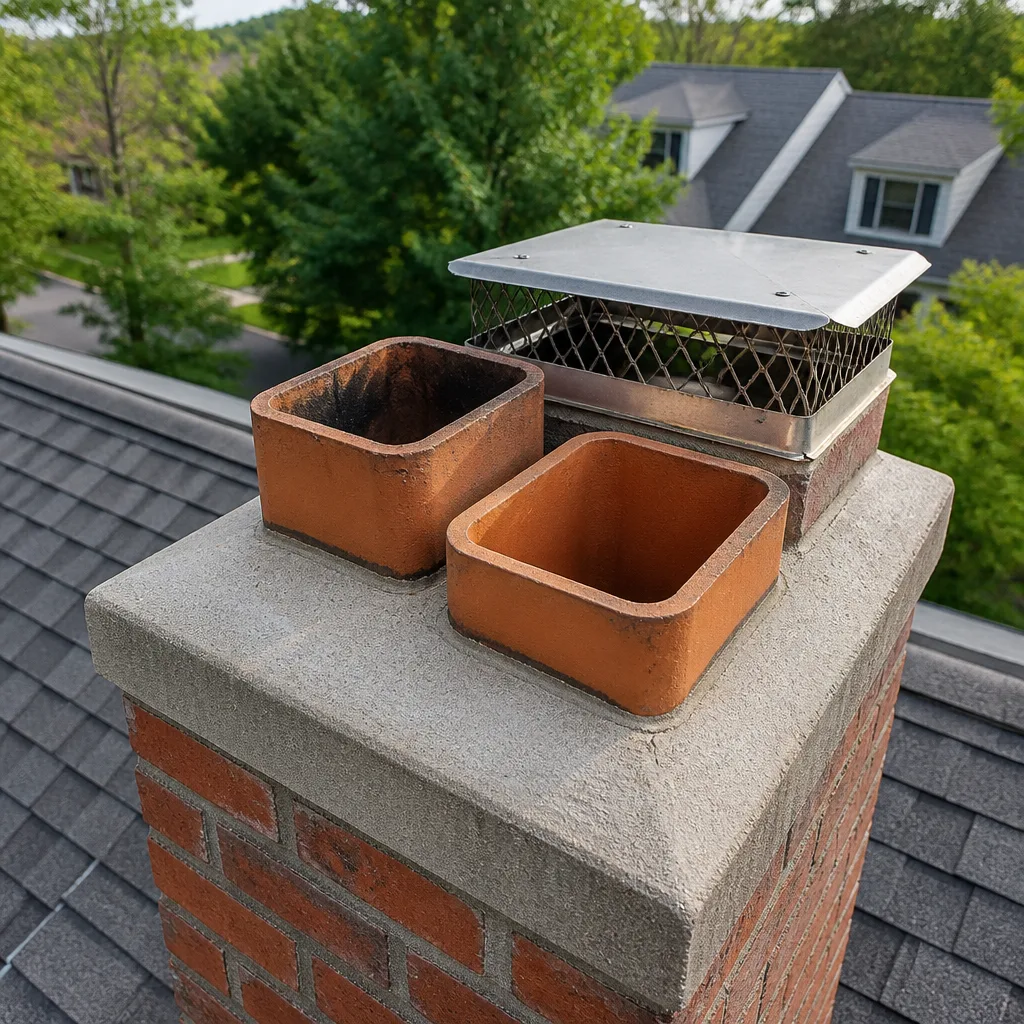
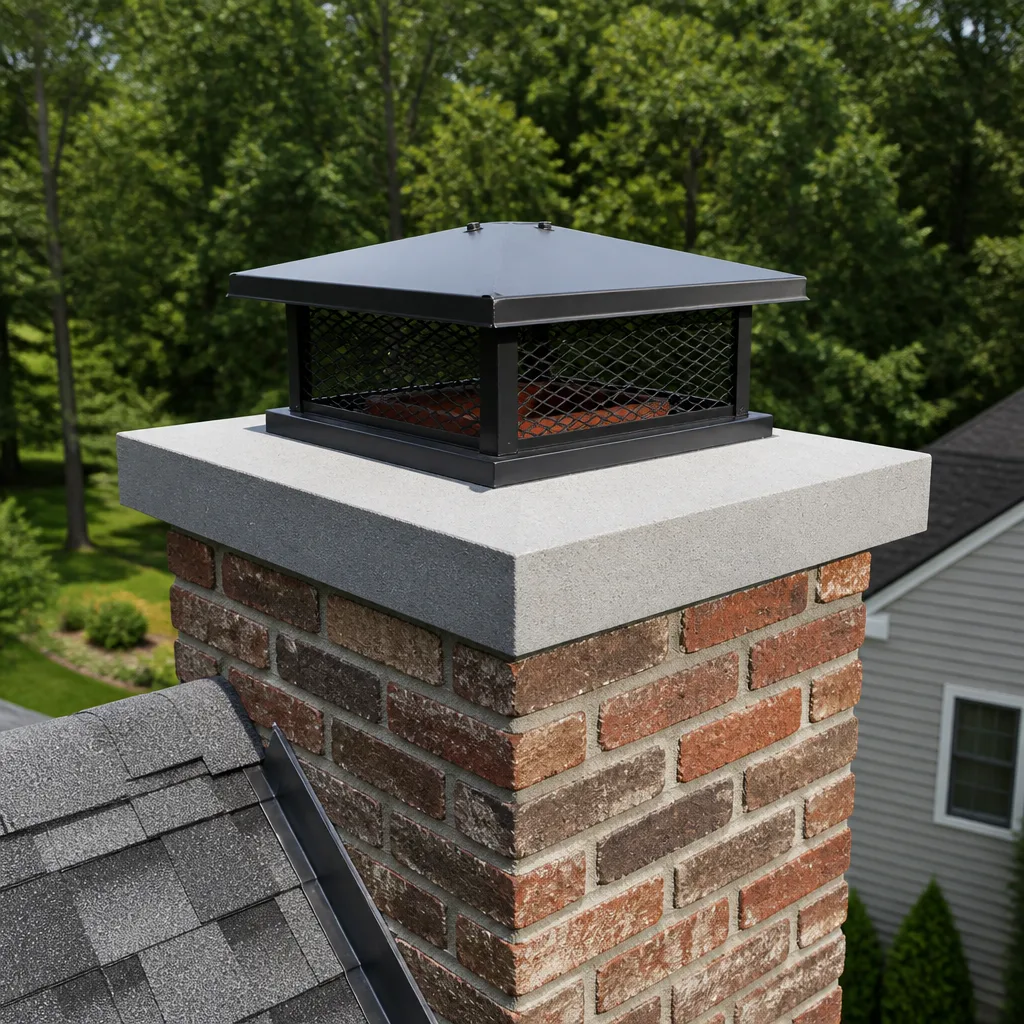
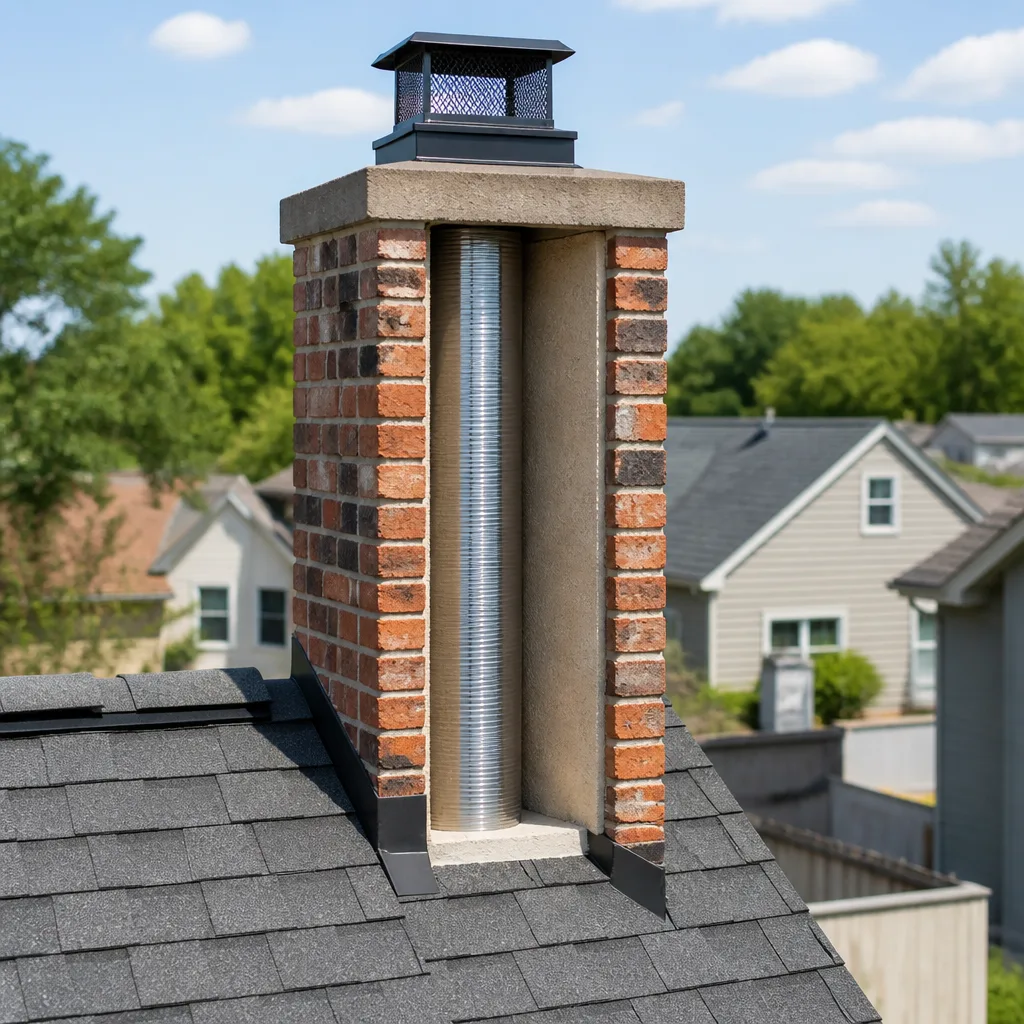
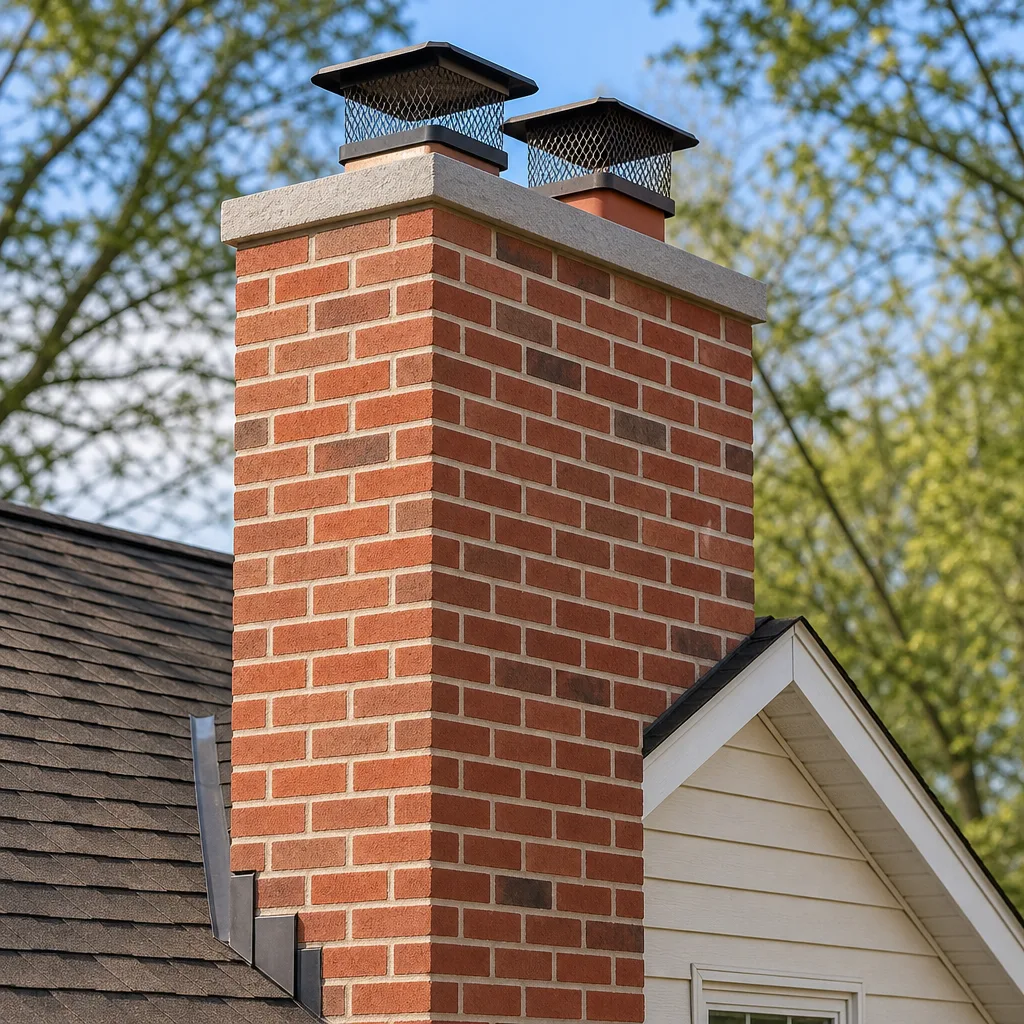
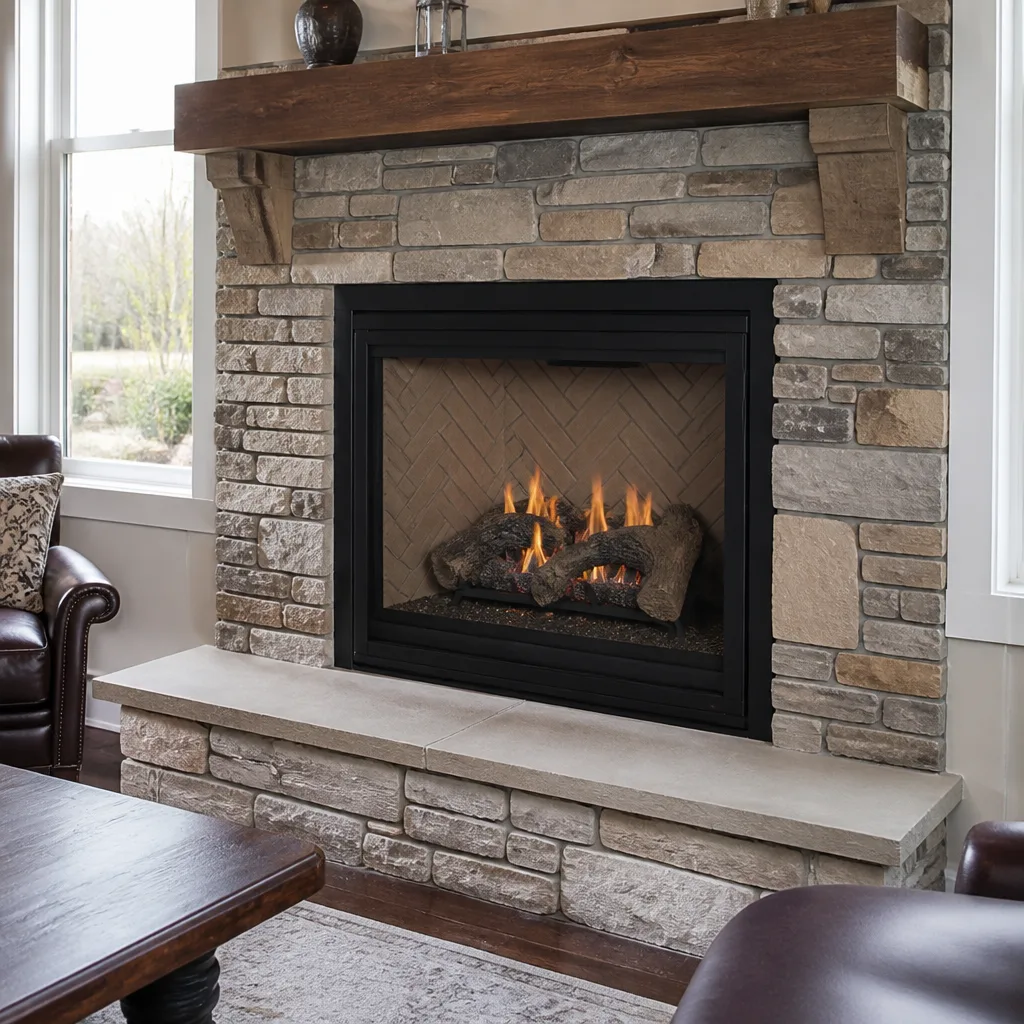
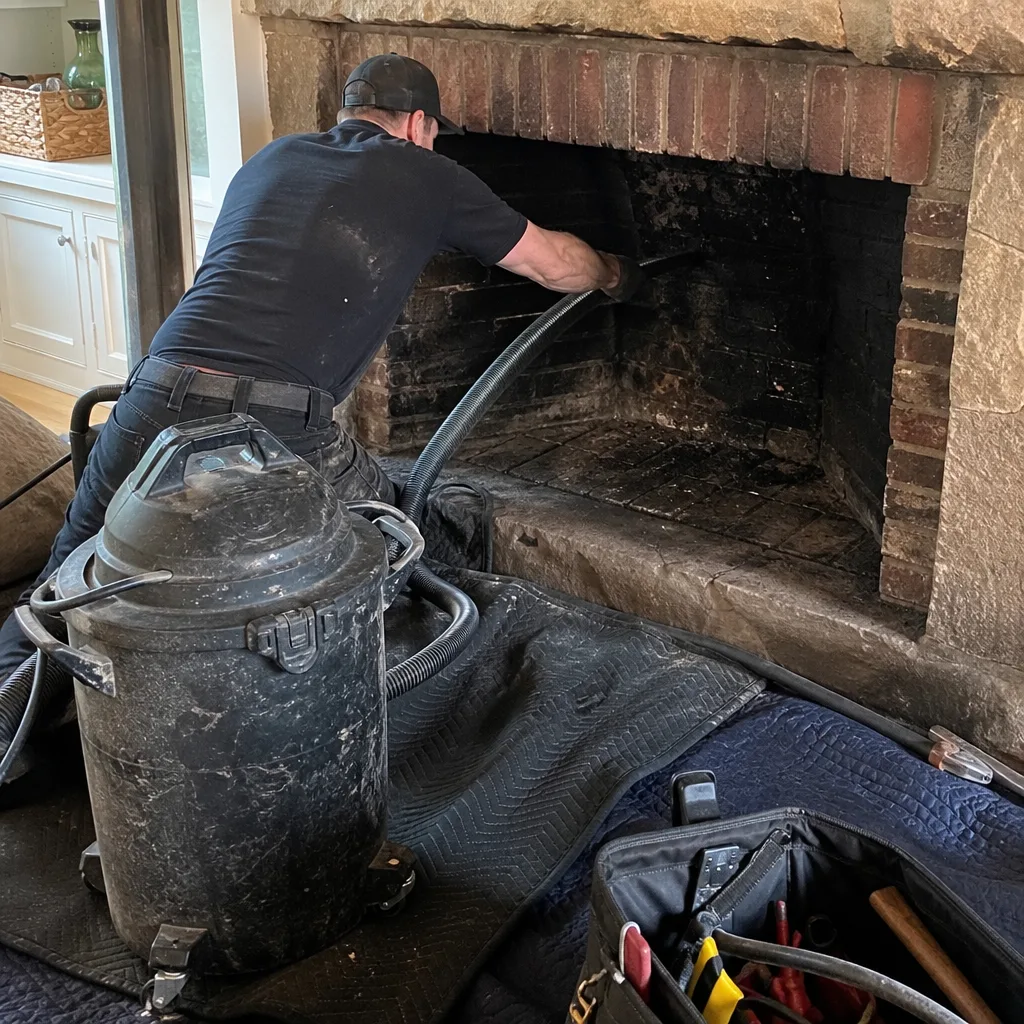 Before
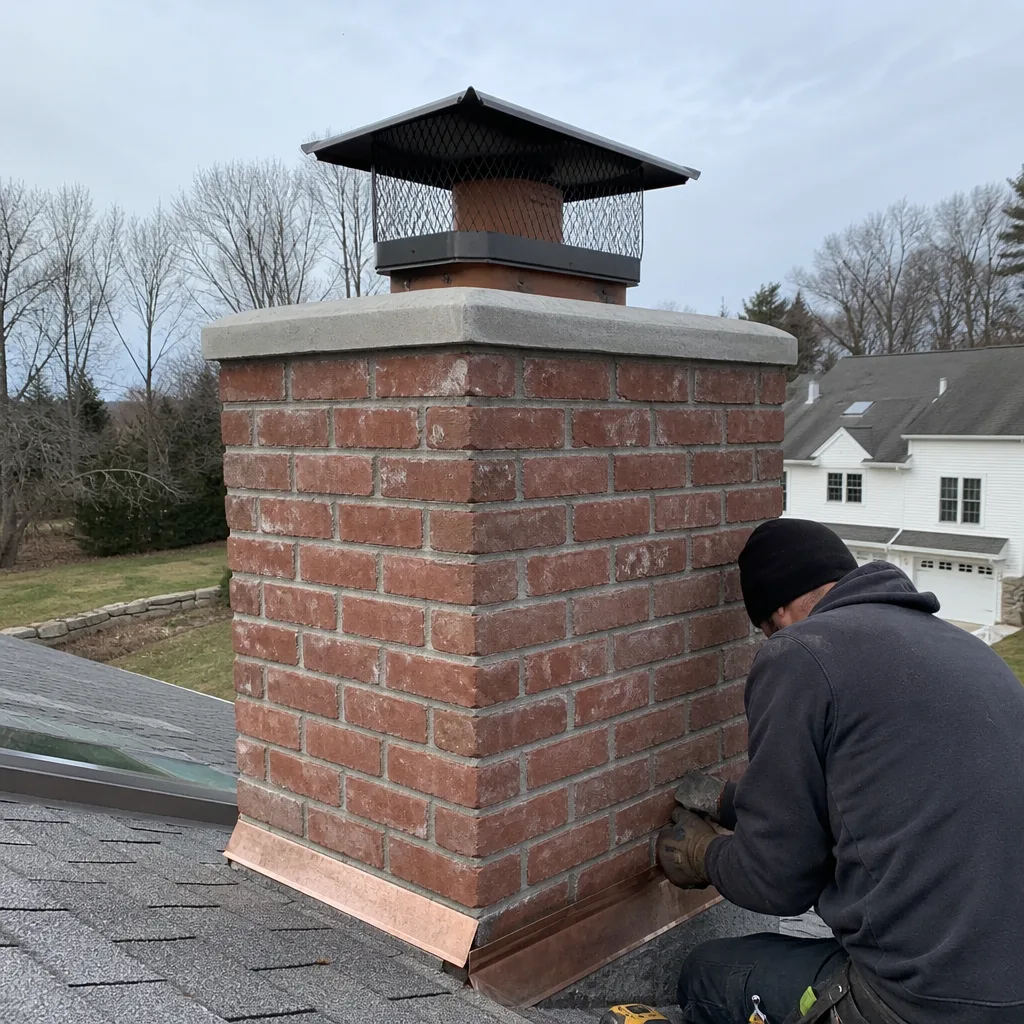 After
After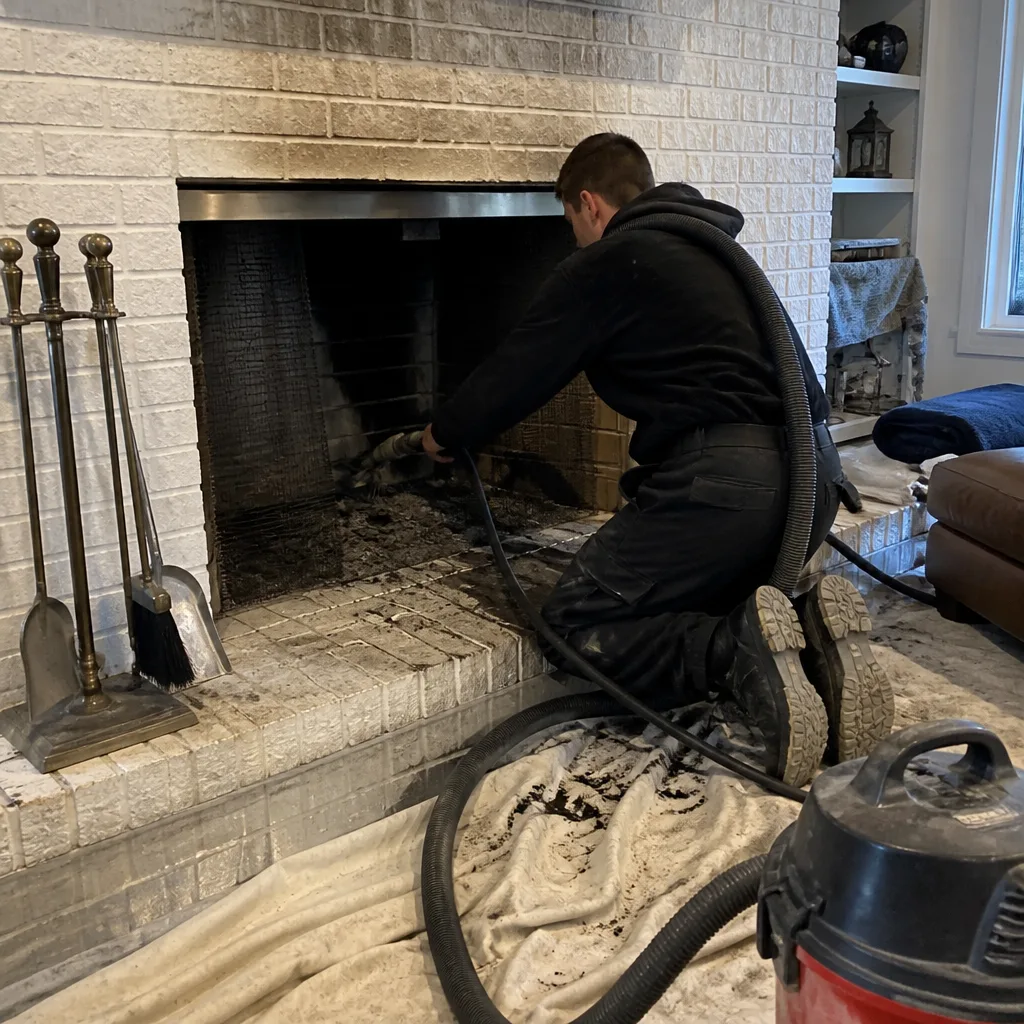 Before
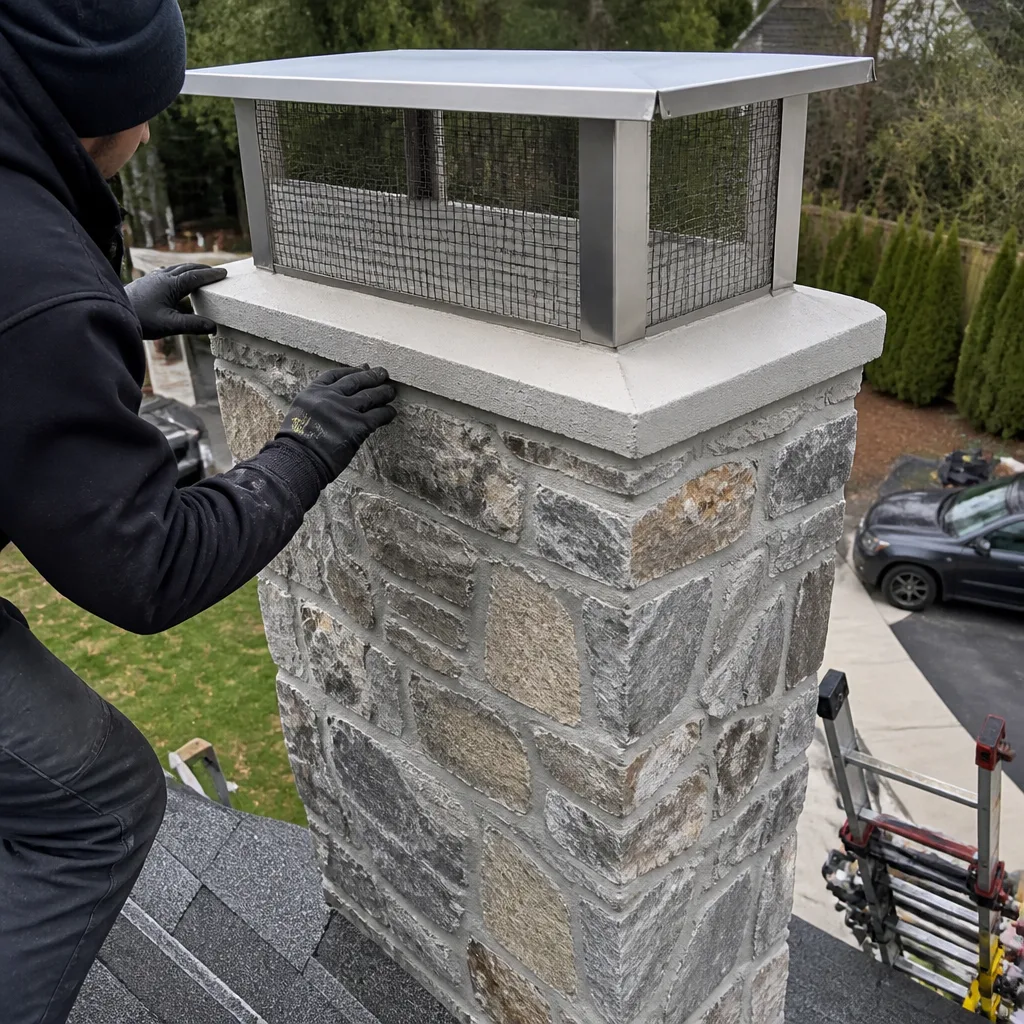 After
After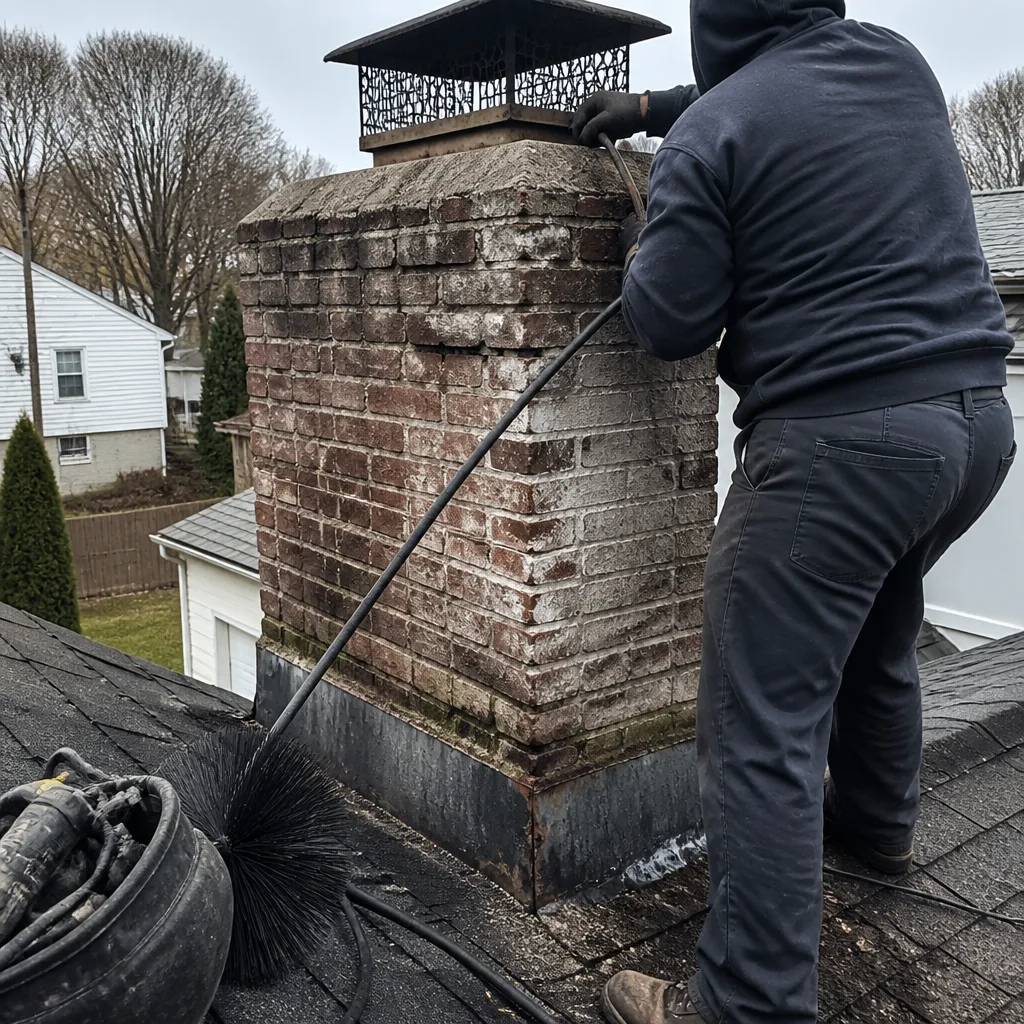 Before
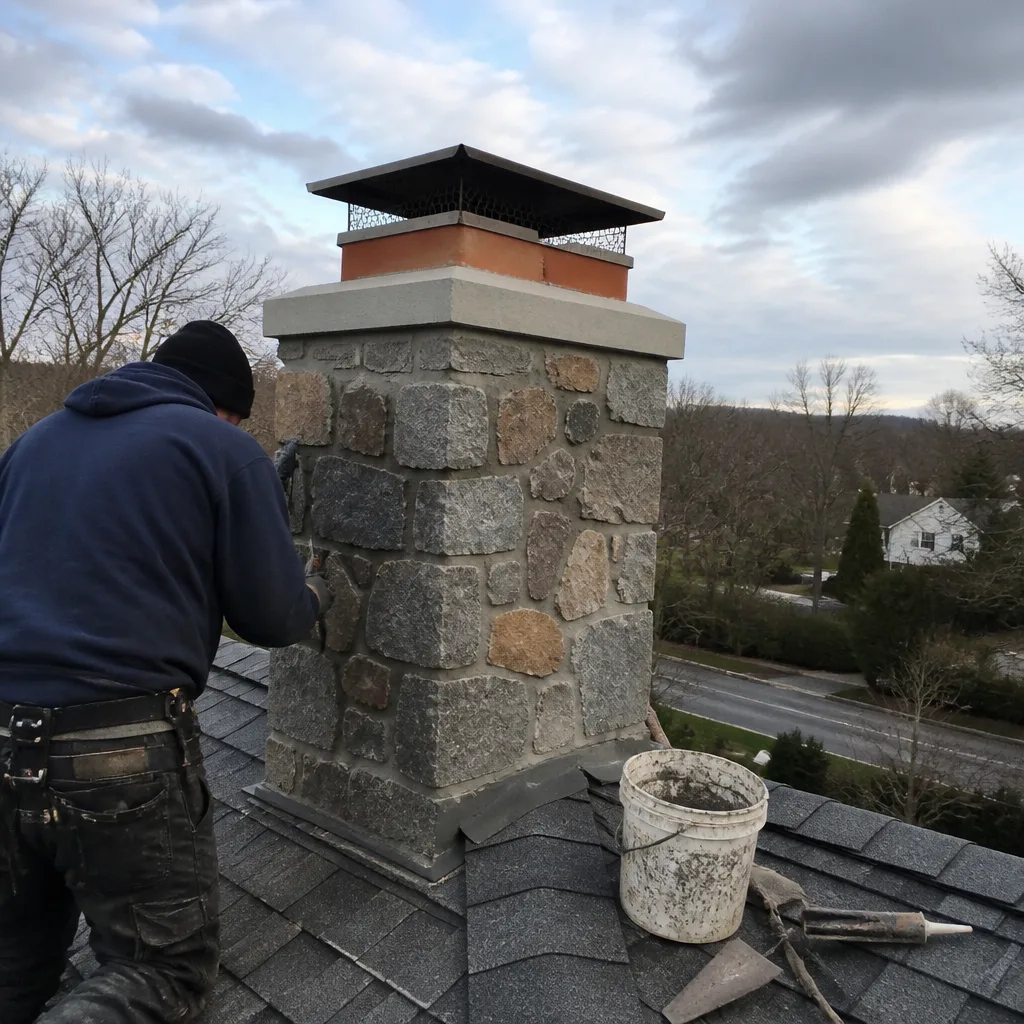 After
AfterSeasonal Chimney Cleaning Care for Stamford: Year-Round Homeowner’s Guide
Stamford averages roughly 26 inches of snowfall a year, and the freeze-thaw cycle here doesn’t just last a few weeks. It runs, in a bad year, from November straight through March. That repetitive freezing and thawing does more damage to mortar joints and chimney crowns than a decade of ordinary use, and here’s the part most guides won’t tell you: the damage is invisible until the moment you light the first fire of the season and the chimney tells you something’s wrong. This guide is written for Stamford homeowners specifically, because a chimney in coastal Connecticut behaves differently than one in Arizona, and advice written for a generic climate will have you preparing for a chimney you don’t actually have. For more guides & resources specific to this region, see our full collection. We’ll walk through what each season does to your flue, when to sweep, what you can safely do yourself, and what genuinely needs a professional eye.
Quick Answer
In Stamford, chimney care is a year-round discipline, not a fall-only chore. Schedule your annual sweep in late spring or early summer when creosote from the previous burn season has had time to cure and the thaw has exposed any winter masonry damage. Between sweeps, keep the damper closed during humid months, check the cap after coastal storms, and never let a freeze-thaw cycle go unaddressed once you spot spalling brick or a heaved crown.
Table of Contents
- What Stamford’s Freeze-Thaw Cycle Actually Does to Your Chimney
- Spring: What the Thaw Reveals That Fall Cleaning Misses
- Summer Humidity and Your Flue: The Invisible Corrosion Problem
- Fall vs. Spring: When Should Stamford Homeowners Actually Schedule a Sweep?
- Early Cold Snap Protocol: Safe Interim Steps While You Wait for a Sweep
- The Coastal Corrosion Factor: Why Flashing and Caps Fail Faster Near the Sound
- What You Can Safely Inspect Yourself, Season by Season
- Common Mistakes to Avoid
- When to Call a Professional
- Frequently Asked Questions
What Stamford’s Freeze-Thaw Cycle Actually Does to Your Chimney
Here’s the mechanism, plainly: water gets into tiny cracks in your mortar or crown. The temperature drops below 32 degrees. That water freezes and expands by roughly 9 percent. The ice thaws. The crack is now wider than it was before. Repeat that fifty or sixty times over a single Stamford winter and a hairline fissure becomes a structural gap. This is not a slow process. A crown that was sound in October can be heaved and cracked by March.
What most homeowners notice first is not the crack itself. It’s the symptom. White chalky staining on the brick face, called efflorescence, shows up when water has been moving through the masonry and depositing salts on the surface. Spalling, where brick faces pop off and leave rough patches, is the next stage. By the time you see spalling, the water intrusion has been happening for months, possibly years. The mortar joints in Stamford chimneys take a particular beating because the temperature swings here are not gradual. A warm afternoon followed by a hard overnight freeze stresses the masonry in a way that a steady cold snap never will.
This is why we tell Stamford homeowners to look at their chimney in January and February, not just in October. If you catch a cracked crown before the spring thaw, you can often address it with a crown sealant or a rebuild before the damage migrates downward into the flue. If you wait, the same water that cracked the crown will find its way into the liner joints. Once liner joints start separating, you’re no longer talking about a repair. You’re talking about a liner rebuild or replacement. The cost difference is significant, and the only thing standing between those two outcomes is a few months of attention.
Your flue doesn’t care how the fire looks. It cares how it breathes. And in winter, it’s breathing wet air through cracked masonry. That’s the whole story.
Spring: What the Thaw Reveals That Fall Cleaning Misses
Fall cleanings have a blind spot. In October, your chimney has been sitting through a warm, humid summer and a mild early autumn. The mortar joints are at their most stable. The crown hasn’t been through a freeze cycle yet. A sweep in October can remove creosote and certify that the flue is safe to burn, but it cannot tell you what the winter will do to the structure. That information only becomes available after the thaw.
Spring is when a chimney tells the truth. Three things show up in March and April in Stamford that a fall inspection simply cannot see:
- Efflorescence. White mineral deposits on the brick face mean water has been traveling through the masonry. It appears after the first sustained thaw and is often the earliest visible sign that your crown or flashing has failed.
- Heaved crowns. A crown crack that was invisible in October becomes a visible gap by April. The freeze-thaw cycle works like a wedge, and the wedge does its work over the winter.
- Liner joint separation. Clay tile liners expand and contract with temperature changes. Repeated freezing and thawing can shift sections of tile, opening joints that allow heat and combustion gases to reach combustible materials around the flue. This is invisible from the ground and only shows up with a camera inspection after the thaw cycle has run its course.
We’ve had a lot of Stamford homeowners tell us their chimney was “fine in October” only to discover a cracked crown in April. It’s not that anyone missed anything. It’s that the damage literally did not exist yet. This is the strongest argument for a spring inspection, even if you also had the chimney swept in the fall. The two visits answer different questions. The fall sweep answers, “Is the flue clean enough to burn?” The spring inspection answers, “Did the winter hurt anything?” Both matter.
Summer Humidity and Your Flue: The Invisible Corrosion Problem
Stamford sits on Long Island Sound, and the humidity here is real from June through September. That humidity doesn’t stay outside. It moves into your chimney, especially if the damper stays open or the chimney lacks a proper cap. Here’s the sequence that gives metal flue components trouble:
- Warm, moisture-heavy air enters the flue through the top of the chimney or through the firebox.
- The air cools as it moves down the flue, and moisture condenses on the metal surfaces of the damper, the smoke shelf, and any stainless steel liner components.
- That condensation sits on the metal through the summer months, accelerating corrosion.
- By September, a damper that worked smoothly in April is rusted stiff, and the interior of a steel liner has a new layer of pitting that wasn’t there five months earlier.
The common assumption is that a chimney only gets wet from rain. That’s wrong. Condensation is a year-round water source, and in a coastal climate like Stamford’s, it’s often the more consistent one. This is why a chimney cap isn’t optional here. A properly fitted cap keeps out rain, yes, but it also slows the migration of humid air into the flue during the summer. It won’t eliminate condensation entirely, nothing will, but it reduces it meaningfully.
The practical step most homeowners skip is closing the damper when the fireplace is not in use. In a house with central air conditioning, the chimney becomes a humidity chimney, drawing moist outdoor air down into a cool flue where condensation forms almost immediately. Closing the damper in late May or early June and leaving it closed until the first fall fire is one of the cheapest preventive measures you can take. If you have a top-sealing damper, even better. They seal at the top of the flue where the air is warmer, and they do a better job of keeping humid summer air out of the chimney entirely.
A chimney that sat sealed all spring and summer collects moisture. The moisture interacts with any creosote residue left from last season. Creosote is hygroscopic, it absorbs water, and wet creosote becomes corrosive. By September, metal components that were fine in April may have begun to oxidize. This is a slow process, but it’s cumulative. A liner that loses a few thousandths of an inch of steel every summer will eventually need replacement years earlier than one that was protected.
Fall vs. Spring: When Should Stamford Homeowners Actually Schedule a Sweep?
Every chimney company has a busy season, and most of them will tell you to schedule in the fall. There’s a reason for that, and it’s only partly about your chimney. Fall is when people think about fireplaces. It’s when the first cold night arrives and everyone suddenly remembers they haven’t had the flue checked. The fall rush is real, and it means six-week wait times, tight scheduling windows, and sometimes rushed work.
Our honest answer is this: for Stamford specifically, the ideal annual sweep window is late spring through mid-summer. Before we explain why, make sure you’re clear on Chimney Cleaning Permits, Codes & Inspections in CT: What You Need to Know. Here’s the reasoning:
- Creosote has fully cured by late spring. Creosote from winter burning hardens over time. A sweep in March is often working with creosote that is still soft and gummy, which can cling to flue walls and resist removal. By May or June, the same creosote has hardened and the brush removes it cleanly. First-degree creosote is a brush job. Third-degree is a glaze, catch it early.
- The spring thaw has already exposed winter damage. A sweep scheduled in May can be combined with a structural inspection that actually sees the post-winter condition of the crown, flashing, and masonry. You fix winter damage when you find it, not six months later.
- You avoid the fall rush entirely. No six-week wait. No squeezing a sweep in between Halloween and Thanksgiving. No discovering in November that you need a repair that can’t be scheduled until December.
- The chimney is clean and ready before burning season. Sweep in June, and the flue is ready the first time the temperature drops in October. There’s no question of whether the chimney is safe to burn. It was certified four months ago and nothing has changed.
Now, the counterargument: some homeowners like a fall sweep because it confirms nothing has happened over the summer. That’s legitimate, and if you burn heavily every winter, an every-six-months schedule is not unreasonable. But once a year, burn or no burn. Chimneys break in the off-season too. The specific timing matters less than the consistency. Pick a season and keep the appointment every year. If you have to choose one, choose spring in Stamford. The thaw schedule makes it the more informative visit.
Early Cold Snap Protocol: Safe Interim Steps While You Wait for a Sweep
Here’s a scenario that plays out in Stamford every October and November: the first hard cold snap arrives, you want a fire, and your chimney hasn’t been swept since last spring. The sweep you called is booked six weeks out. What do you do in the meantime?
First, the honest answer to the question “Is it safe to burn without a recent sweep?” is: it depends on what the chimney looked like at the last inspection and how heavily you burned. If you burned occasionally last winter and the flue had only light first-degree creosote, a few fires before the sweep are generally low-risk. If you burned every day for five months and haven’t had the flue inspected in two years, the responsible answer is to wait. Here are the interim steps, in order of what’s safe and sensible:
- Do a visual inspection from the ground. Look at the chimney cap, the flashing, and the crown area with binoculars. If you see missing bricks, a visibly cracked crown, or a cap that’s missing or off-center, do not burn until a professional has looked. Those are structural warnings, not cosmetic issues.
- Check the damper. Open and close it fully. If it’s stiff, rusted, or won’t seal, that’s a sign of moisture damage, and moisture damage affects the flue above it. Have it inspected before you light a fire.
- Shine a flashlight up the flue from the firebox. If you see heavy black glaze that reflects light, that’s third-degree creosote, and it’s a fire hazard. If you see light sooty deposits that look flat, that’s first-degree creosote, and a fire is probably fine while you wait.
- Burn only seasoned hardwood if you do burn. Unseasoned wood creates more creosote per fire, and you’re already running without a recent sweep. Don’t compound the problem.
- Keep fires small and hot. A small, hot fire produces less creosote than a big, smoldering one. Don’t load the firebox full and damper it down for an all-night burn.
- Never burn anything but wood. No wrapping paper, no cardboard, no construction scraps. Those materials burn unpredictably and add residue to the flue.
The step we do not recommend is a DIY creosote treatment log. Those products chemically soften creosote so a brush can remove it. They don’t remove creosote on their own, and they don’t make an unswept chimney safe. If the flue has third-degree glaze, no treatment log in the world will fix that. It requires a professional with a rotary brush and in some cases a chem treatment followed by brushing.
If you’re not sure, call us. Wendell or one of his crew will talk it through on the phone and tell you honestly whether you can burn now or should wait for the sweep. We don’t charge for that conversation.
The Coastal Corrosion Factor: Why Flashing and Caps Fail Faster Near the Sound
Stamford’s chimney advice should not be copied from an inland town. The proximity to Long Island Sound adds a variable most sweep guides ignore entirely: salt air. Salt and water combine to accelerate corrosion on any metal component exposed to the elements, and a chimney has three of them: the flashing at the roof line, the chimney cap at the crown, and any exposed metal fireplace components inside the firebox.
Flashing is the most common failure point. In a coastal environment, galvanized flashing corrodes at the seams and along the edges where the metal meets the masonry. Once flashing corrodes, it lifts. Once it lifts, water gets under it. The water then moves along the underside of the flashing and into the masonry, where the freeze-thaw cycle takes over. This is why a chimney that looks fine from the ground may be leaking around the roofline. Ask anyone on your street who has had a roof leak in the last five years. In Stamford, it’s often the chimney flashing, not the shingles.
Caps are the second failure point. A steel chimney cap in a coastal town will rust out faster than the same cap would in, say, Danbury or Waterbury. The salt air eats through the mesh sides first, then the welds at the corners, then the top plate. A rusted cap no longer keeps rain out, and it no longer keeps animals out either. Raccoons and squirrels in Stamford find their way into uncapped chimneys every single spring, and a rusted cap is essentially an open invitation.
When we install caps or replace flashing, we choose materials rated for coastal exposure. It’s not the cheapest option, but it’s the one that lasts. A stainless steel cap costs more than a galvanized one and lasts two to three times longer within five miles of the Sound. The math is straightforward. Replace a galvanized cap every eight years at $200 each, or install a stainless cap once at $450 and be done for two decades. Coastal homeowners should think of corrosion as a certainty, not a risk. Plan for it.
What You Can Safely Inspect Yourself, Season by Season
You don’t need to climb on your roof to keep an eye on your chimney. Most of the meaningful information is visible from the ground, through a fireplace opening, or from a second-floor window. Here’s a Chimney Cleaning & Sweep Maintenance Checklist for Stamford Homeowners that takes about ten minutes per season and will catch most problems before they become expensive. This is what we tell our Stamford customers to watch for:
Spring (April – May)
- Look for white staining (efflorescence) on the brick above the roofline. New staining means water is moving through the masonry.
- Check for popped or missing brick faces. Spalling brick is visible from the ground if you look carefully.
- Look at the cap. Is it still centered on the crown? A cap shifted by winter wind is no longer sealing the flue.
- Inside, open the damper and check for rust or stiffness that developed over the winter.
Summer (June – August)
- After a heavy storm, look at the flashing line around the chimney. Water staining on the ceiling near the fireplace is a flashing problem, not a roof problem.
- Check for animal activity. Twigs or nesting material visible at the top of the flue means something moved in.
- Close the damper when not using the fireplace. This is a humid season, and a closed damper keeps humid air from condensing in the flue.
Fall (September – October)
- Run the flashlight check up the flue from the firebox. Light soot is fine. Heavy glaze is not.
- Look at the exterior mortar joints. Cracks wider than a dime need attention before winter.
- Make sure the cap is still intact and the mesh sides have no holes. Raccoons looking for winter shelter start scouting in early fall.
- If you haven’t had your annual sweep yet, this is the last practical window before cold weather.
Winter (November – March)
- After heavy snow, look at the crown area. A heavy snow load that freezes and thaws on a compromised crown accelerates damage.
- If you’re burning regularly, watch for smoke spilling into the room instead of drafting up the flue. That’s a sign of a blockage or airflow problem, not a draft issue.
- Check the ceiling around the chimney pipe for water stains that appear during thaws. Roof leaks near the chimney in winter are almost always flashing-related.
None of this requires professional tools. It requires the willingness to look, consistently, four times a year. Most chimney problems are caught by the homeowner who looked, not by the technician who finally showed up.
Common Mistakes to Avoid
These are the errors we see most often in Stamford, and they’re preventable:
- Skipping the cap replacement because “there’s no rain getting in anyway.” A cap wasn’t just for rain. It’s for animals, debris, and humid air. A chimney without a cap is a flue that collects leaves, nests, and coastal humidity all summer.
- Burning a creosote treatment log once a year instead of getting a sweep. Treatment logs don’t clean the chimney. They soften creosote so a brush can remove it. A log without a brush is furniture polish without a rag.
- Ignoring efflorescence because it “washes off.” The staining comes from water moving through the masonry. Washing the stain off doesn’t stop the water. By the time you see it, the water has been at work for months.
- Scheduling the sweep in November because “that’s when everyone does it.” The fall rush means you’ll wait six weeks and may get a shorter, rushed appointment. In Stamford, a June sweep is the same price and a more thorough visit because the technician isn’t running behind schedule.
- Using the fireplace as an all-night heat source with the damper damped down. A smoldering fire produces creosote at an accelerated rate. The long, low burn is the creosote factory. Burn smaller, hotter fires instead.
- Assuming the flashing is a roof problem. If water is coming in around the chimney, the flashing is usually the culprit, and a roofer will often replace shingles and leave the flashing untouched. Call a chimney person for flashing work, not a roofer.
- Waiting until “the chimney is dirty” to call. You can’t see first-degree creosote from the firebox. By the time the buildup is visible, it’s already third-degree glaze. Once a year, whether it looks dirty or not.
When to Call a Professional
Some things a homeowner should handle themselves, and some things require training, equipment, and insurance. Here’s the line: if you can see it from the ground or through the firebox opening, you can inspect it. If the repair requires a ladder on a two-story roofline, working at heights, or disturbing the flue structure, call a professional. This is not about protecting the trade. It’s about the reality that chimney work on a Stamford roof in winter is dangerous, and framing that needs to be correct is expensive to fix when it isn’t.
Call us if you see spalling brick, a cracked or heaved crown, water staining near the chimney, a rusted or missing cap, flue glaze you can’t identify, or smoke spilling into the room. We’ll send Wendell or one of his crew with a camera inspection, the footage, and a plain-English verdict. Every time, no exceptions. Chimney Cleaning & Sweep in Stamford is available year-round, not just in the fall. Top Hat Chimney offers free estimates in Stamford, call (475) 242-5865.
Frequently Asked Questions
Once a year, burn or no burn. The National Fire Protection Association standard is that chimneys should be swept when creosote reaches 1/8 inch, but since you can’t measure that from the firebox, an annual sweep is the practical standard. If you burn every day through the winter, a mid-season sweep in January or February is worth adding, especially in Stamford where the burn season is long.
A standard chimney sweep in Stamford typically runs between $180 and $340 depending on the flue height, accessibility, and whether the chimney has been recently cleaned. Roof access, steep pitches, and cap removal all affect the price. The honest answer is that a sweep is the least expensive service we perform, and it’s the one that prevents the expensive ones. Call (475) 242-5865 for an exact quote, the estimate is free and the number we quote on the phone is the number on the invoice.
You need a new liner if the existing one is cracked, separated, or deteriorated to the point where heat and combustion gases can reach combustible materials around the flue. You don’t need a new liner just because someone says you do. Ask for camera footage. If the company can’t show you the problem, don’t authorize the work. We run a camera on every inspection and show you the footage on the spot. The footage and a plain-English verdict, every time, no exceptions.
Creosote accumulates. First-degree creosote is flammable, but it burns off in a normal fire. Second-degree creosote is denser and more flammable; it ignites more easily and burns hotter. Third-degree creosote is a hardened glaze that ignites at high temperatures and sustains a chimney fire. A chimney fire can crack the flue liner, ignite surrounding framing, and render the chimney unsafe to use until repaired. The progression from first-degree to third-degree takes between one and three burn seasons in a typical Stamford household. The sweep is $200. The repair after a chimney fire starts in the thousands.
You can buy the brushes and do it in theory, and many homeowners do. The reason we don’t recommend it is less about the sweeping itself and more about what you can’t see. A DIY sweep doesn’t include a camera inspection, and the camera inspection is how you find liner cracks, joint separation, and hidden damage before it becomes a house fire. The sweep removes the creosote. The inspection finds the problems. If you’re going to skip the inspection, you’ve done half the job.
Yes. Within five miles of Long Island Sound, the salt air corrodes caps faster than inland, and an uncapped chimney in Stamford collects rain, humid air, leaves, and animals. A missing cap is the single most common cause of water damage we find in chimneys that “just started leaking.” The cap is not an optional accessory. It’s the roof of the chimney.
The Bottom Line
Stamford’s climate doesn’t follow a tidy schedule, and neither should your chimney care. The freeze-thaw cycle works from November through March, the humid summers corrode metal components, and the coastal air adds salt to every equation. The homeowners who avoid expensive repairs are the ones who look at their chimneys in January, schedule sweeps in June, replace caps before they rust through, and trust the camera footage over the sales pitch. Top Hat Chimney home has been serving Stamford since 1999, and we still answer the phone ourselves. For Chimney Repair in Stamford or Fireplace Services in Stamford, call (475) 242-5865. We’ll tell you honestly what needs doing, what can wait, and what it should cost. No pressure, no surprise invoices, no strangers. Just Wendell and his crew, and the work done right.
Written by Wendell Pike, Owner at Top Hat Chimney, serving Stamford since 1999.